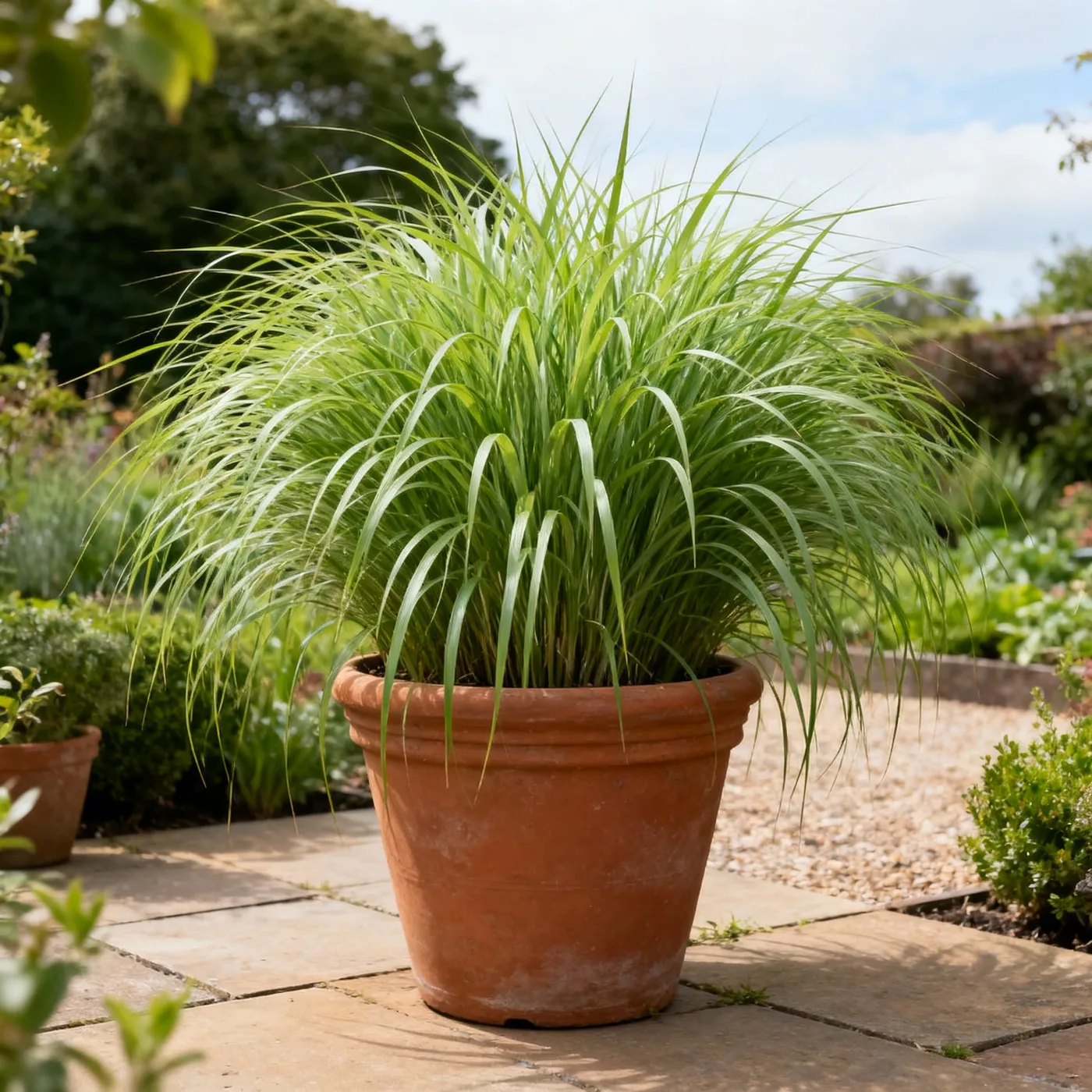
Dwarf Maiden Grass
Miscanthus sinensis (dwarf cultivar, most commonly sold as 'Adagio'; some nurseries use 'Yaku Jima' or similar compact selections)
Dwarf Maiden Grass, Nursery-Grown and Ready to Plant
This size is not in the online store yet. Ask about availability and we will reply with current stock.
- Blooms in late summer and fall when most grasses are dormant, extending garden color into autumn
- Deer resistant and thrives in heat with moderate drought tolerance once established
- Dwarf size is perfect for borders, containers, and smaller landscapes
About this plant
Dwarf Maiden Grass is a compact ornamental grass that brings late-season color and texture to borders, containers, and mass plantings. Reaching 3-4 feet, it produces silvery coppery-pink plumes in late summer through fall while foliage turns golden tan to bronze. Hardy in zones 5-9, it thrives in full sun and tolerates a range of soils.
Your plant arrives as a nursery-grown clump ready to install in the garden or container. On arrival, water deeply to settle the soil. Place in full sun (or light part shade if needed). Water regularly until established, typically over the first few weeks. Once settled, it's moderate drought-tolerant and needs little ongoing fuss.
Dwarf Maiden Grass at a glance
| Botanical name | Miscanthus sinensis (dwarf cultivar, most commonly sold as 'Adagio'; some nurseries use 'Yaku Jima' or similar compact selections) |
|---|---|
| Plant type | ornamental grass (warm-season, clump-forming perennial grass) |
| USDA zones | 5-9 |
| Mature height | 3-4 ft in foliage; 4-5 ft including bloom plumes (varies by cultivar) |
| Mature width | 2-3 ft |
| Sun | full sun; tolerates light part shade but flowering and form are best in full sun |
| Water | average moisture; regular water until established, then moderate drought tolerance |
| Bloom time | late summer into fall (roughly August-October, earlier than standard-size Miscanthus) |
| Bloom color | coppery-pink to silvery-white plumes, fading to buff/tan |
| Growth rate | moderate; reaches full clump size in about 1-2 ft of spread per year over 2-3 seasons, then holds steady |
| Deer resistance | high |
| Best planting time | spring after last frost is generally preferred; fall planting possible in milder zones |
Container sizes explained
| Quart / QT | A 4 inch pot, roughly one quart of soil. A young starter plant, the most economical way to buy several. |
|---|---|
| #1 / 1 Gallon | A trade one gallon pot (about 6.5 inches). One to two seasons older than a quart, with an established root system. |
| #3 / 3 Gallon | A trade three gallon pot (about 10 inches). A well-developed shrub or small tree, often 2 to 4 feet tall on arrival. |
Questions before you buy
Which size should I choose?
The Quart suits edging and small containers. The #1 works for borders and specimen plantings. The #3 gives a fuller, faster-looking result; for mass planting, order multiples in the size that fits your space and budget.
When should I plant after it arrives?
Plant within a few days of arrival when possible. Unpack and water it well. If temperatures are extreme, place it in a sheltered spot for a day to acclimate.
How big will this grass get?
Dwarf Maiden Grass reaches 3-4 feet tall (4-5 feet with bloom plumes) and spreads 2-3 feet wide at maturity. It grows 1-2 feet of spread per year initially, reaching full size in about 2-3 years. Once mature, the clump holds steady.
Does it need full sun?
It thrives in full sun and flowers best there. It will tolerate part shade, but foliage density and bloom production drop noticeably in less than 6 hours of direct sun. For best color and flowering, locate it in full sun.
Which USDA zones is it hardy in?
This grass is hardy in USDA zones 5 through 9, covering most climates from the northern United States through the South. At the cold edge of zone 5, apply mulch for winter protection; in zones 6-9, no special protection is needed.
What's the first-year care like?
Water regularly during the first few weeks until established. Once the root system settles (usually within a month), taper watering; it's moderate drought-tolerant. No fertilizer is needed in typical soil. By late summer, expect early blooms and a healthy clump.