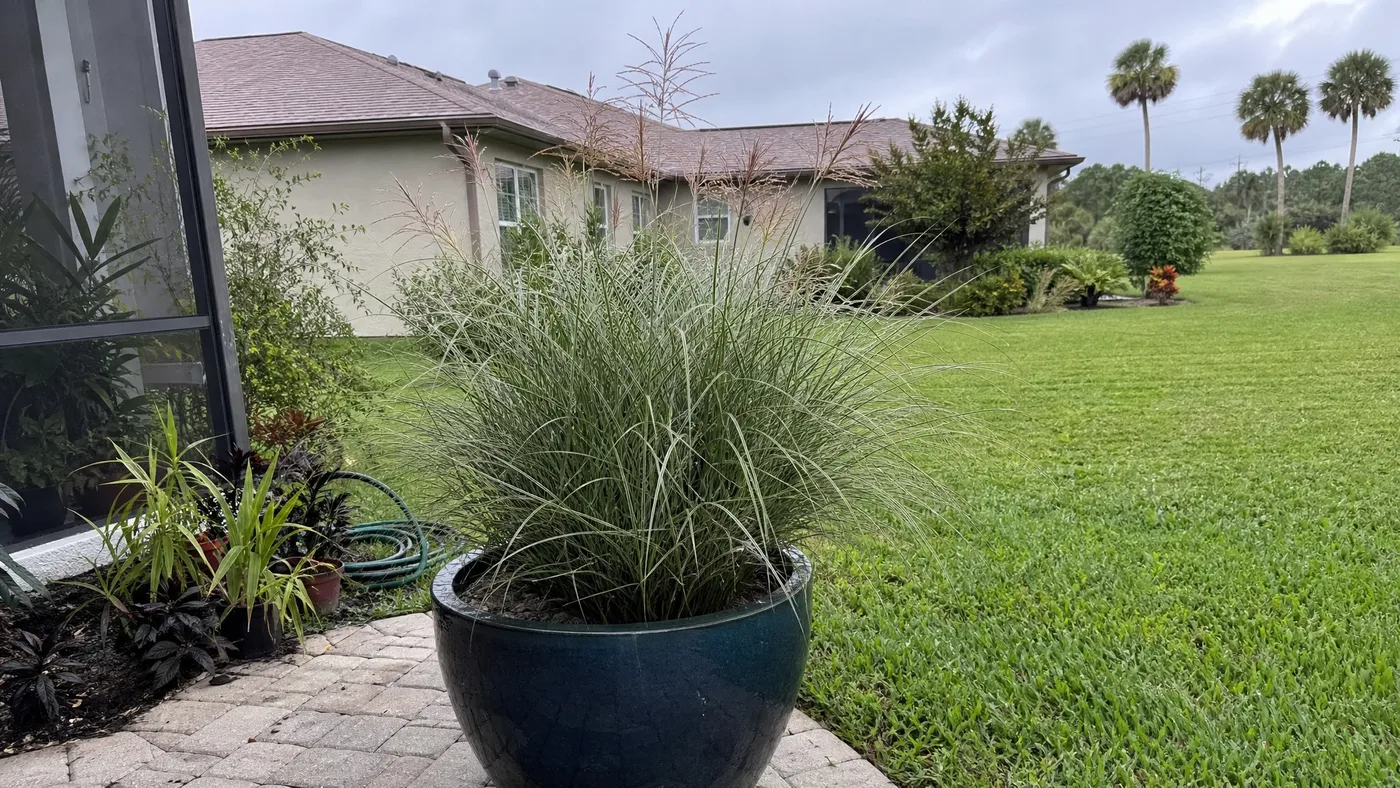
Little Miss Dwarf Maiden Grass: Size, Foliage and Best Uses
Put a tape measure against a Little Miss clump in late June and you'll read well short of its finished 3 to 4 feet. The blades are already thin and the clump is still filling in. That is the moment people start asking where it will fit, how far apart to set it, and whether it will stay put in their yard.
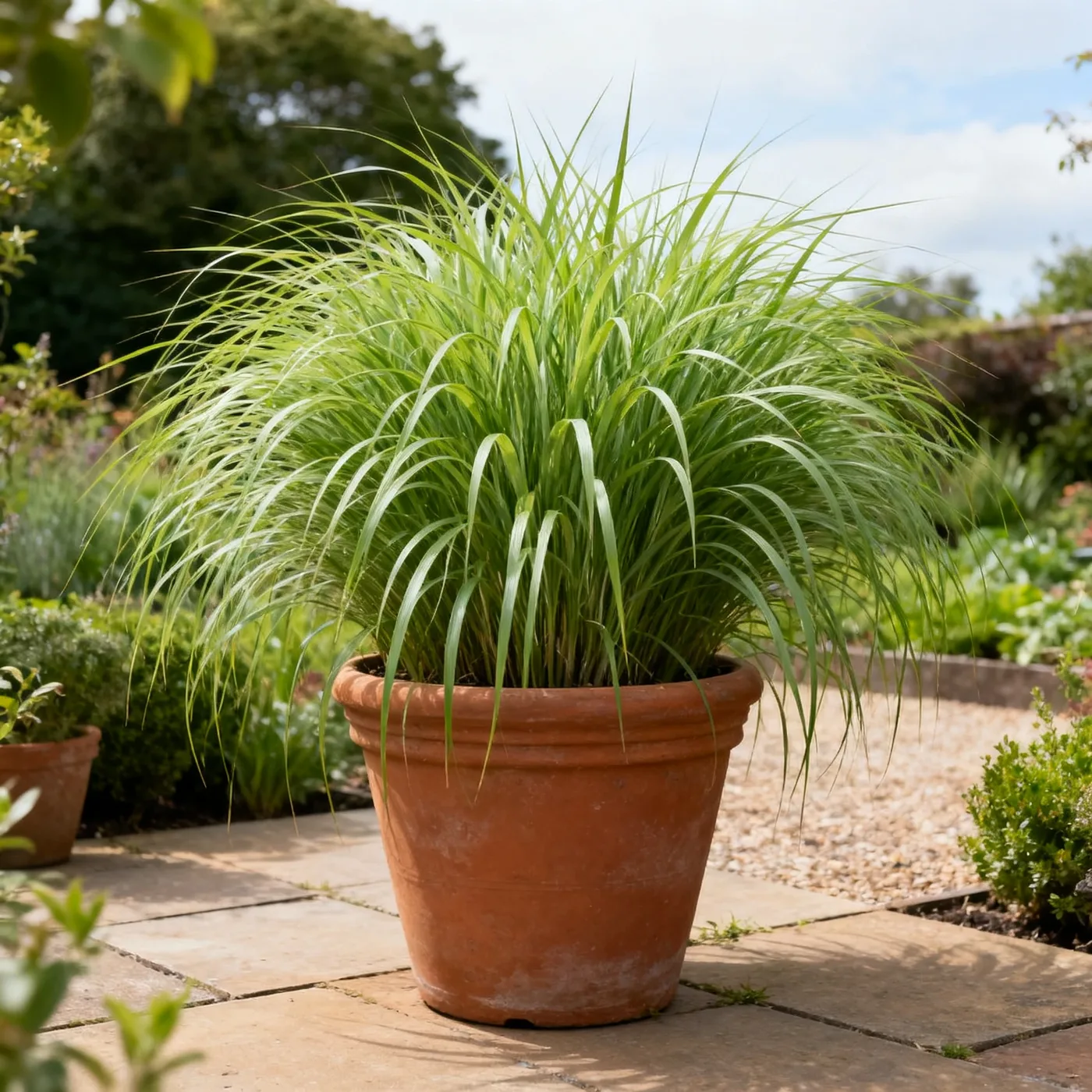
The answer depends on the spot. This is a compact, narrow-leaved selection, finer in texture than the Adagio most nurseries sell, and that fineness behaves differently in a tight bed than it does in a gale or a hot pot.
We'll walk you through four real yard situations, a narrow side bed, a windy corner lot, a deck pot and a perennial border, then compare how the foliage and fall color read in each.
A Narrow Side Bed for Little Miss Dwarf Maiden Grass
A strip beside a driveway or fence is where this selection earns its keep. The species can run 4 to 12 feet tall, according to NC State Extension, which would swallow a bed like this. Little Miss finishes at about 3 to 4 feet, so you can use it where a full-size maiden grass would block a window or lean over a car door.
Width and Spacing
Measure the bed at its narrowest point. The one hard width we can point to comes from the Kansas State trial, where Adagio, a close dwarf relative, reached 36 inches wide in its first year. Plan on about 3 feet of room per clump and treat Little Miss as no wider than that. A bed under 3 feet deep works with a single row set toward the middle, so the plumes never reach the pavement.
Set the crown at the same depth it sat in the pot and water it in well. After that, leave it alone. If you want a continuous screen rather than a row of individual clumps, our spacing guide for borders and hedges covers the tighter layouts.
Leaf Texture Against a Hard Edge
Beside a wall, fence or driveway, texture does most of the work. The fine blades arch into a soft, dense fountain that blurs a hard edge without crowding it. Broad-leaved miscanthus looks coarse and stiff in the same spot. Give the bed at least six hours of sun, which the Arkansas Extension service says these grasses need, and the fountain stays upright and tidy instead of stretching toward the light.
What Goes Wrong in a Tight Strip
Two things trip people up. First, a bed against a wall can be hotter and drier than the rest of the yard, and a fence can cut your sun below that six-hour floor. Watch where the shade falls in late June, when the sun is highest, and again in September before you commit to a spot.
Second, tight beds hold humid air. Florida's extension service notes that rust occasionally infests the foliage but often goes away in drier weather, so leave a few inches between the clump and the wall for air to move. If the driveway gets salted in winter, keep the crown back from the edge and ask your local extension service how salt runoff affects grasses in your area.
Little Miss Dwarf Maiden Grass on a Windy Corner Lot
One of the most common questions we get is whether a grass this fine will lie flat in wind. On an exposed corner, the narrow blades work in your favor. Thin leaves tend to shed gusts rather than catch them like sails, and the short 3 to 4 foot stature keeps the clump low and out of the strongest air. Taller, broad-leaved maiden grasses are the ones more likely to splay open after a storm.
What you will see in wind is movement, not damage. The blades stream in one direction and spring back. Plumes sway a little more than the foliage does, and the whole clump reads as a soft ripple along a lot line. That motion is half the reason to plant it on a corner.
Setting It Up for Exposure
Wind dries a planting faster than still air does, so the first season matters more here. Water new clumps deeply through their first summer. Once established, the Arkansas Extension service calls these grasses extremely drought tolerant, and a corner lot is where you will lean on that. Our watering guide lays out the taper from establishment to hands-off.
Group three or five clumps rather than scattering singles. A drift supports itself visually and cuts the amount of bare ground wind can scour. Skip the stakes. A clump this size does not need them, and a stake in a ripple of fine blades just looks like a mistake.
Winter in the Wind
Leave the dead foliage standing through winter. It shields the crown from cold wind, and on a corner lot the tan blades keep moving when everything else in the yard has gone still. Cut the clump to the ground in late winter, before new growth starts, since Arkansas Extension advises cutting before the seeds disperse.
That last point matters on an open lot, because wind carries seed. The species is invasive in North Carolina, so if you garden there or nearby, check with your local extension office before you plant. Cutting on time is the simplest way to keep a windy site from seeding itself around.
A Hot Deck With One Big Pot
A single large pot on a sunny deck is the toughest of the four situations, and it works well if you commit to the container. The pot, not the plant, sets your limits. A small pot dries out in a day of heat and leaves you watering constantly, while a big one holds moisture and gives the roots room for a clump of this size. Choose the largest pot your deck and your back can handle.
Drainage is not optional. The Florida extension service describes the species as adaptable to most well-drained soils, and in a pot that means a hole at the bottom and a gritty, free-draining potting mix. Heavy garden soil packs down and stays wet around the crown.
A Simple Potting Routine
Follow these steps and the pot largely runs itself:
- Fill the pot with a free-draining mix and set the crown at the same depth it grew in the nursery container.
- Water deeply until it runs out the bottom, then let the top inch or two dry before watering again.
- Keep the pot where it gets full sun, because six hours is the floor for upright growth.
- Cut the clump to the ground in late winter, as you would in a bed.
Heat, Water and Winter
Deck boards and a nearby wall throw heat back at the pot, and a dark container warms through on its sunny side. Lighter colors help. So does setting the pot on feet so air moves underneath. Check it by hand in hot spells, pushing a finger into the mix, rather than watering on a calendar. A pot can be bone dry while the foliage still looks fine, and fine blades show stress late.
The in-ground drought tolerance you read about does not carry over to a pot, because the roots cannot go looking for water. Treat a deck clump as a thirsty plant in July and it will repay you. Roots in a pot are less cold-hardy than roots in the ground, so in the colder end of the range check with your local extension service about winter protection. Our container guide goes deeper on pot sizes and overwintering.
Fronting a Perennial Border With Dwarf Maiden Grass
In a mixed border, Little Miss belongs in the front third. Selections sold as dwarfs can still outgrow their tags (Yaku Jima grew to 70 inches tall after two years), but this one holds close to 3 to 4 feet. That makes it a front-of-border grass you can see over and through, rather than a screen at the back.
The fine blades act as a frame for whatever blooms behind and beside them. Because the clump holds a tight arching shape, it won't flop forward over low perennials the way a looser grass does.
Companions That Suit the Texture
Pair the fine leaves with bold or rounded forms. Broad-leaved perennials, daisy-type flowers and anything with a flat or domed head look sharper next to thread-like foliage. Choose sun-lovers that tolerate dry spells, so the whole bed shares one watering rhythm. Our landscape ideas and companion plant list has more combinations.
Placement Depth and Edges
Leave a little room at the front so the arching blades have somewhere to fall. Plant the clump a foot or so back from the edge of a path, and the leaves will soften the border line without blocking the walkway.
Repeat the grass every few clumps along a long border and it works as a rhythm, tying together plants that bloom at different times. The species resists deer, which makes it a good anchor in a border that gets browsed. In our rows, the clumps people pick for a border are almost always the finest-bladed ones.
Reading Foliage and Fall Color Across All Four
The same plant looks different depending on what surrounds it. The table below compares how the foliage and autumn color tend to show in each of the four yards.
| Yard | How the foliage reads | How fall color shows |
|---|---|---|
| Side bed | Dense, fine fountain against a hard edge | Close up, so you notice every shift in blade tone |
| Windy lot | Streaming blades, constant motion | Catches low light as it moves |
| Deck pot | Compact mound at eye level | Seen daily, so color change feels gradual |
| Border front | Soft frame for taller neighbors | Contrasts with fading perennials |
Plume Timing in Each Spot
Plume timing is the part to watch. Adagio is one of the earlier bloomers, with flowers consistent through August, while the species as a whole flowers around late September in Arkansas. Plume colors in the species run gray or silver, pink, red or burgundy and white. We can't give you an exact date for Little Miss in your yard, so record your own.
Expect small differences between sites. A clump in a hot, sheltered side bed may open ahead of one on a cool, breezy corner, and a pot can run on its own schedule. That is normal, and it is why side-by-side notes are more useful than any general date.
Leave the Fade Standing
Plenty of advice says to cut grasses back as soon as they fade. We'd leave them standing. The tan blades and feathery seed heads carry the clump through winter, and the Arkansas Extension service says to cut to the ground in late winter. In a border the standing clump holds frost beautifully, and in a side bed it keeps a bare strip from looking empty. Our autumn color guide shows what the change looks like week by week.
What These Yards Teach About Little Miss Dwarf Maiden Grass
Across all four situations the pattern is the same. This is a compact grass of about 3 to 4 feet with narrow blades, and that combination makes it the right-sized choice where a larger maiden grass would overreach. It needs six hours of sun and well-drained soil, plus water through its first summer. After that you plant it and leave it alone.
Texture is its signature. Wherever you put it, the fine blades soften edges, move in wind and frame other plants. The one habit worth building is to write down the date the first plumes open each year, and compare it from season to season in a garden notebook so you know when to expect the show.
Dwarf Maiden Grass
Nursery-grown Dwarf Maiden Grass in sizes from Quart, shipped to your door.
From $19.99
Shop Now →Every clump of Little Miss we raise sits in an open row with sun on it from dawn to dusk and loose, fast-draining soil, and each one is cut to the ground in late winter. Nothing leaves our farms unless we would happily plant it in our own yards. If this guide has you picturing a compact mound of fine blades in your garden, come and see the plants we have ready.