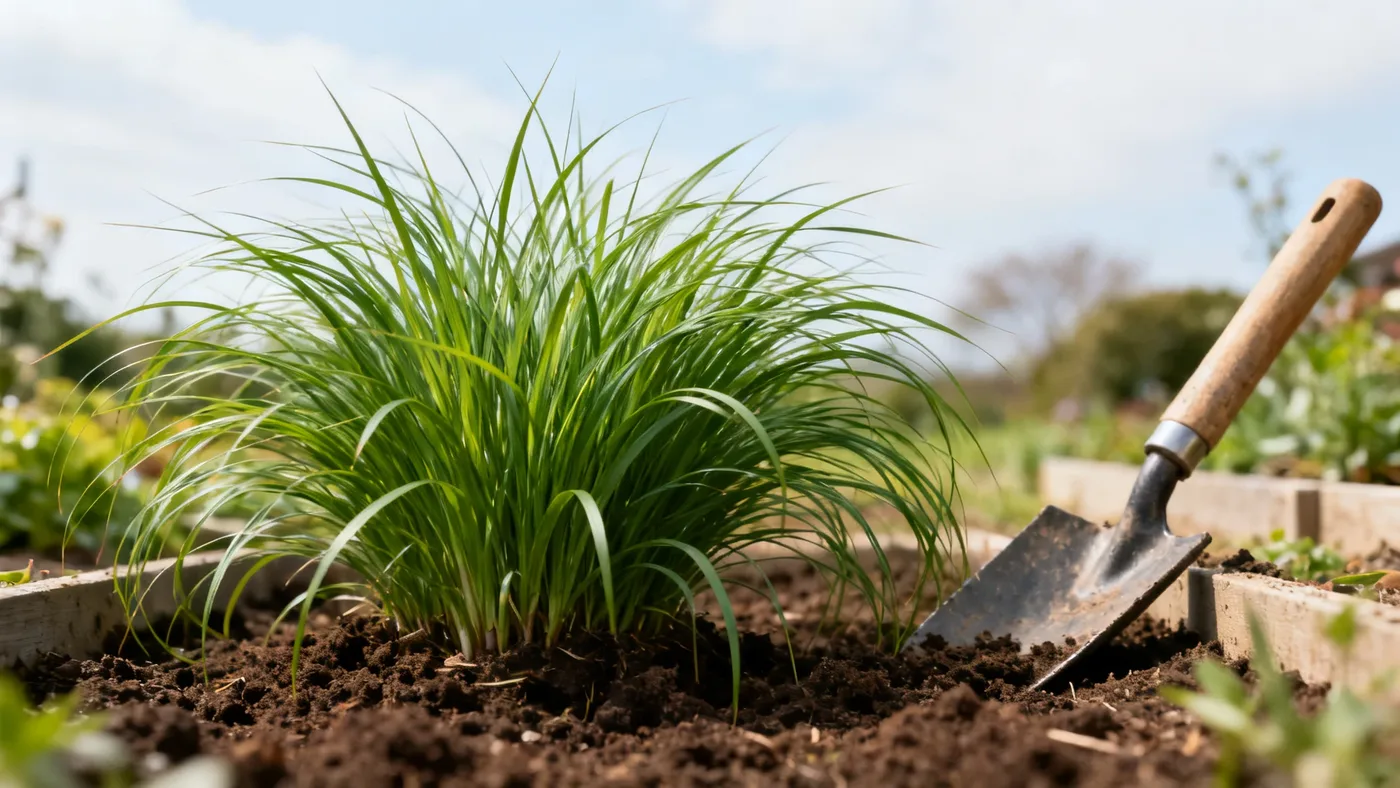
Watering Dwarf Maiden Grass: Establishment to Mature Plants
Dwarf Maiden Grass needs different watering approaches depending on its age. A newly planted clump requires consistent moisture to establish roots, while a mature plant can handle dry spells with ease. Understanding these two phases keeps your grass thriving without wasted water or root stress.
Understanding Your Dwarf Maiden Grass Water Needs
Dwarf Maiden Grass is a warm-season perennial that prefers average moisture. The key word here is "average," not wet and not bone-dry. Since this grass adapts to well-drained soils, including both clay and sandy types, your watering strategy should match your local rainfall and soil type.
The plant's drought tolerance improves dramatically as it matures. In the first 1 to 2 growing seasons, regular watering supports root development. Once established, Dwarf Maiden Grass develops the ability to handle periods without supplemental water, though performance is best when soil remains moderately moist during the growing season.
Watering During Establishment (Year One)
The establishment phase runs from planting day through the first full growing season. A newly planted Dwarf Maiden Grass clump, whether from a quart or #1 container, has roots confined to a small root ball. These roots must grow outward and downward to access soil moisture beyond the immediate planting hole.
During this phase, aim to keep the top 3 to 4 inches of soil consistently moist. You are not watering to saturation, where water pools or soil stays waterlogged. Instead, soil should feel damp to the touch but not soggy. This encourages roots to grow down rather than stay shallow and dependent on frequent watering.
Water frequency depends on rainfall, temperature, and soil type. In sandy soil with hot weather, daily watering may be needed the first 2 to 3 weeks after planting. In clay soil or during mild spring weather, every 2 to 3 days may be sufficient. Check soil moisture by inserting your finger 2 inches into the earth. If it feels dry at that depth, water is needed.
Transitioning to Mature Plant Care (Years Two and Three)
By the second growing season, your Dwarf Maiden Grass clump spreads 1 to 2 feet and develops a more extensive root system. At this stage, you can extend the time between waterings. The grass can now pull water from a larger soil volume.
Continue regular watering during the growing season, but reduce frequency compared to year one. Watering deeply but less often, perhaps every 5 to 7 days during dry periods, encourages deep root development. A single deep soaking is more beneficial than shallow daily sprinkling.
By year three, your Dwarf Maiden Grass reaches its mature clump size of 2 to 3 feet wide and 3 to 4 feet tall in foliage. This is when drought tolerance becomes apparent. During normal growing conditions with regular rainfall, supplemental watering may not be necessary at all. Water only during extended dry spells lasting 2 to 3 weeks without rain.
Materials You Will Need
- Garden hose or soaker hose (soaker hose is preferable for even moisture delivery)
- Watering can (for container plants)
- Mulch, 1 to 2 inches of organic material (optional but recommended for moisture retention)
- Soil moisture meter or your finger (for checking moisture depth)
- Bucket or rain gauge (to measure water depth, if desired)
Step-by-Step Watering Guide
For Newly Planted Dwarf Maiden Grass (Weeks 1 to 8)
- Water immediately after planting. Soak the planting hole and surrounding area until water penetrates 4 to 6 inches deep. This settles the soil and eliminates air pockets around the roots.
- Check soil moisture daily. Insert your finger 2 inches into the soil next to the plant. If the top inch is dry, water is needed.
- Water early in the morning. Morning watering allows foliage to dry quickly, reducing disease risk. Avoid evening watering, which leaves wet foliage overnight.
- Apply water at soil level, not overhead. Direct water to the base of the clump. This delivers moisture to roots and keeps foliage dry.
- Water deeply each time. Aim for 1 to 1.5 inches of water per week, delivered in 1 to 2 sessions. Measure depth by running your finger into the soil after watering to confirm moisture reaches 3 to 4 inches down.
- Reduce frequency after 4 to 6 weeks. As the plant establishes, extend days between watering to every 2 to 3 days if no rain occurs. The clump should show active green growth by this point.
For Established Plants (Year 2 and Beyond)
- Water deeply once per week during active growth. During spring and summer, one deep watering session (1 to 1.5 inches) is usually sufficient if rainfall is minimal.
- Check soil before watering. If the top 2 inches of soil are still moist from rain or recent watering, skip the irrigation.
- Reduce watering in fall. As temperatures cool and the plant enters dormancy in late fall, taper watering. The grass no longer actively grows.
- Cease watering in winter. Once Dwarf Maiden Grass is fully dormant and foliage has turned golden tan to bronze, rainfall supplies all needed moisture.
- Resume spring watering after new shoots emerge. In early spring, when the clump begins to green up (which can be late compared to other perennials), return to regular watering if rain is scarce.
Recognizing Overwatering Problems
Dwarf Maiden Grass does not tolerate waterlogged soil. Overwatering creates conditions for root rot and fungal issues. Signs of overwatering include:
- Foliage that yellows or browns starting from the base of the clump
- Soft, mushy stems that collapse easily
- A sour or musty smell from the soil
- Slow or stunted growth despite warm weather
- Clumps that flop open or splay outward (which can also result from too-rich soil)
If overwatering has occurred, stop irrigating immediately. Allow the soil to dry out. If rot is severe and affects the entire clump center, the plant may not recover. In future seasons, water less frequently and ensure soil drains well.
Recognizing Underwatering Problems
Underwatering is less common with established Dwarf Maiden Grass but may affect newly planted clumps or those in very hot, sandy soils. Signs include:
- Foliage that appears dull, grayish, or wilted even after cool evenings
- Slow spread and stunted growth during the first year
- Delayed bloom or weak plume formation
- Leaf tips that turn brown and crispy
If underwatering is suspected, increase watering frequency slightly and check soil moisture more often. Young plants benefit from consistent moisture; established plants can recover from brief dry periods.
Tips for Watering Success
Apply mulch after planting. A 1 to 2 inch layer of shredded bark or compost around the base (keeping it 2 inches away from the stems) moderates soil temperature and conserves moisture. This reduces watering frequency and stabilizes soil temperature during establishment.
Use a soaker hose or drip irrigation. These deliver water directly to soil at a slow rate, minimizing runoff and allowing deep penetration. They also keep foliage dry, which reduces disease pressure.
Water on cool days if possible. Watering during heat waves or peak sun hours increases evaporation loss. Early morning or late afternoon watering (though morning is preferred) is more efficient.
Know your soil type. Sandy soil drains quickly and may need watering more often, especially in year one. Clay soil retains moisture longer; be cautious not to overwater in clay, where standing water can accumulate. Well-drained soil of either type is ideal for Dwarf Maiden Grass.
Let rainfall count toward your watering. If your area receives 1 inch of rain in a week, supplemental watering that week may not be necessary. Use a rain gauge to track actual precipitation.
Adjust for your climate zone. Gardeners in USDA zones 5 to 6 may experience cooler springs and falls, which require less frequent watering than the hot zones 8 to 9. Local conditions matter more than a fixed schedule.
Common Mistakes to Avoid
Shallow, frequent watering. Sprinkling lightly every day encourages roots to stay shallow and dependent on frequent water. This weakens the clump and delays drought tolerance. Water deeply but less often.
Watering in the evening. Evening irrigation leaves foliage wet overnight, creating an environment for fungal diseases like rust or leaf spot, which can occur during prolonged humid conditions.
Overhead watering. Sprinklers that spray foliage are less efficient and more likely to promote disease. Direct water to the soil surface.
Ignoring soil drainage. If your planting area holds water after rain or watering, Dwarf Maiden Grass will suffer. Amend heavy clay or compacted soil with coarse sand or compost to improve drainage before planting.
Continuing to water through dormancy. Once foliage has fully turned golden tan in late fall, stop watering. The plant is resting and does not need moisture input. Unnecessary watering in this phase can rot the crown.
Assuming all cultivars behave identically. Trade names like "Dwarf Maiden Grass" encompass several cultivars, most commonly 'Adagio' but sometimes 'Yaku Jima' or similar compact selections. Slight differences in size or growth rate may exist. Observe your specific plant and adjust watering based on its performance, not a generic schedule.
Expected Results Over Time
With proper watering, your Dwarf Maiden Grass may show steady, healthy growth through the establishment years. Foliage should be dense and green during the growing season. Bloom can appear in the plant's first or second year, typically from late summer into fall, with coppery-pink to silvery-white plumes that fade to buff or tan. By year three, the clump reaches its mature size and requires minimal watering except during extended droughts.
Each plant's performance depends on many factors including sunlight (full sun is best), soil quality, local climate, and overall care. For comprehensive care guidance beyond watering, see our Dwarf Maiden Grass care guide.
Quick Reference: Watering Schedule and Checklist
| Plant Stage | Soil Moisture Goal | Watering Frequency | Signs to Check | Key Actions |
|---|---|---|---|---|
| Week 1-4 (Establishment) | Top 3-4 in. consistently moist, not soggy | Daily or every other day | Finger test: damp 2 in. deep | Water at soil level, early morning, check daily |
| Month 2-3 (Early Growth) | Top 3-4 in. moist; allow slight drying between waterings | Every 2-3 days | Green growth visible; roots spreading | Reduce frequency; mulch if not done |
| Year 2 (Spreading Phase) | Moderate moisture during growing season | Once per week if no rain | Clump expands 1-2 ft; no wilting | Deep soak; skip if rain occurs |
| Year 3+ (Mature, Established) | Normal rainfall usually sufficient | Only during 2-3 week dry spells | Full clump (2-3 ft wide); tall foliage and plumes | Water only if no rain for 14-21 days |
| Fall/Winter (Dormant) | Dry; rainfall adequate | No supplemental water | Foliage golden tan to bronze; plumes persist | Stop watering; leave standing for winter interest |
Pre-Watering Checklist
- Check soil 2 inches deep: is it moist or dry?
- Has rain fallen in the last 3-5 days? If yes, consider skipping watering.
- Is foliage green and turgid, or wilted and dull?
- Is soil draining well, or does water pool after watering?
- What is the plant age (newly planted, year 1, year 2+)?
- Is it early morning (best time to water)?
- Have I checked for signs of overwatering (yellowing, rot, mushy stems)?