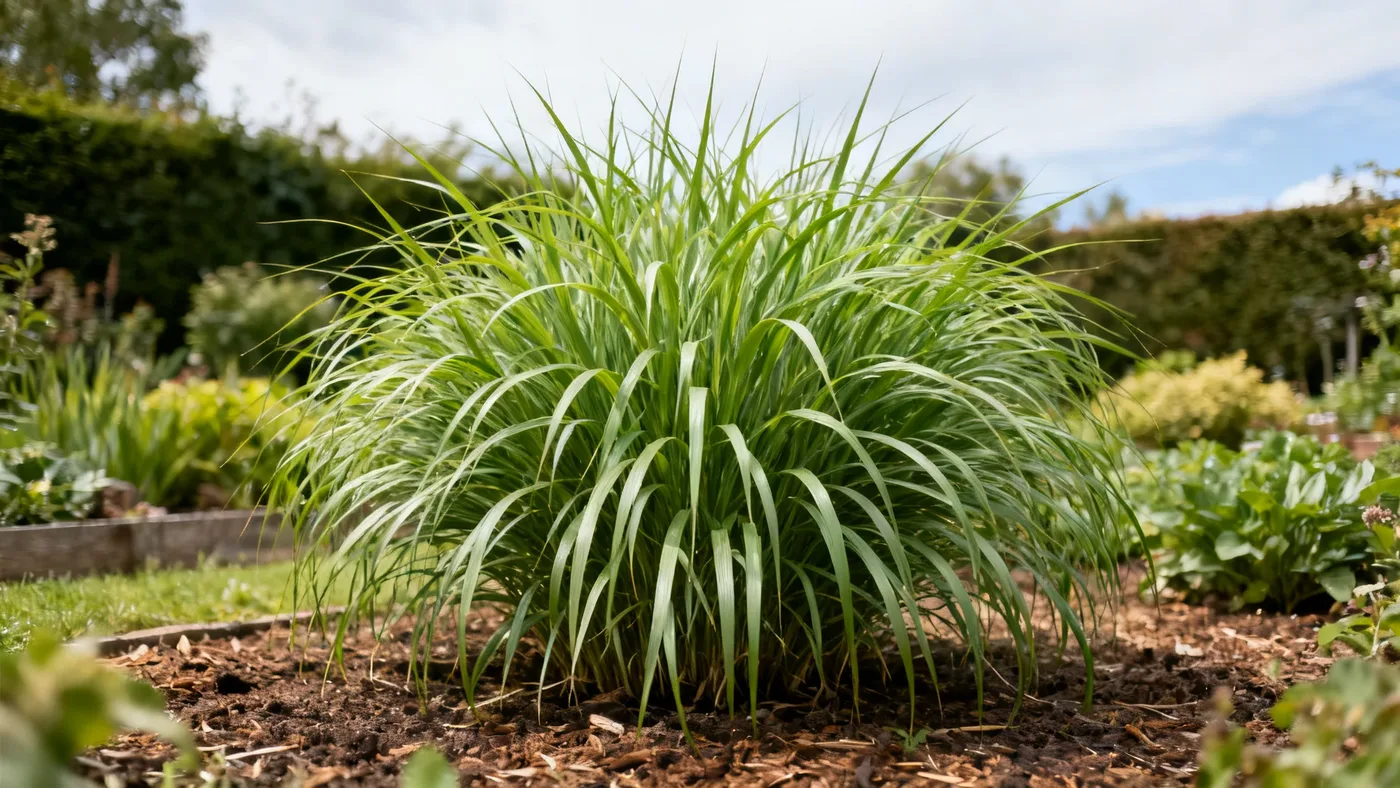
Dwarf Maiden Grass Care Guide: Growing Tips for a Thriving Clump
Dwarf Maiden Grass (Miscanthus sinensis dwarf cultivars, most commonly sold as 'Adagio') is one of the most dependable ornamental grasses for home gardens. Unlike its full-size relatives, dwarf maiden grass reaches just 3 to 4 feet in foliage and 4 to 5 feet with blooms, making it suitable for borders, containers, and smaller landscapes. Once established, this warm-season perennial tolerates drought, resists deer, and requires minimal fertilizing. The real secret to a thriving clump is understanding its growth rhythm, knowing when and how to prune, and recognizing the few problems that actually matter.
Table of Contents
- Planting Your Dwarf Maiden Grass
- Understanding Watering Needs
- Soil and Fertilizing Essentials
- Pruning and Seasonal Care
- Managing Common Problems
- Division and Propagation
- Quick Reference Guide
Key Takeaways
| Factor | Details |
|---|---|
| USDA Hardiness Zones | 5 to 9 |
| Mature Size | 3 to 4 ft tall (foliage only), 4 to 5 ft with plumes; 2 to 3 ft wide |
| Full Sun Requirement | Full sun preferred; tolerates light part shade but flowers best in full sun |
| Time to Full Size | 2 to 3 years to reach mature clump size |
| Years of Productivity | 10+ years; divide every 3 to 4 years if center thins |
Planting Your Dwarf Maiden Grass
Choosing the Right Location
Full sun is the single best investment you can make in dwarf maiden grass. These plants need at least 6 to 8 hours of direct sunlight daily to develop dense, upright clumps and produce the characteristic coppery-pink to silvery-white plumes that bloom in late summer and fall. Light part shade is tolerated, but flowering diminishes and the clump may splay open or flop outward. Avoid planting in deep shade entirely.
Spacing also matters for landscape success. When planting dwarf maiden grass in mass plantings or groups, space clumps 2 to 3 feet apart. This gives each plant room to spread and prevents crowding that can lead to fungal issues in humid climates. For single specimen plantings, a 2-to-3-foot clump width means you have visual breathing room around the plant.
When to Plant
Spring after the last frost is the preferred planting season. This timing gives the grass the entire growing season to establish roots before winter dormancy. Fall planting is possible in milder zones (8 and 9), but spring planting carries less risk and more reliable establishment in zones 5 to 7.
Dwarf maiden grass grows at a moderate rate, expanding roughly 1 to 2 feet per year in spread and reaching full mature clump size in 2 to 3 seasons. Don't expect an instantly full landscape; the plant rewards patience with decades of performance.
Soil Preparation and Planting Steps
This grass is remarkably adaptable to soil types. It thrives in well-drained soils, whether sandy, clay, or loam. The key is drainage, not fertility. Waterlogged soil in winter can rot the crown; dry, sandy soil is usually fine as long as the plant is established. Soil pH should ideally fall between 6.0 and 7.0, though the plant tolerates a broader range from 5.5 to 7.5.
- Dig a hole slightly wider than the root ball and just as deep.
- Loosen the surrounding soil to encourage lateral root spread.
- Place the dwarf maiden grass so the crown (where foliage emerges) sits level with or slightly above ground.
- Backfill with native soil; avoid amending heavily with compost, which encourages soft, floppy growth.
- Water thoroughly after planting and keep soil consistently moist (not soggy) for the first 4 to 6 weeks.
Understanding Watering Needs
Establishment Phase
New plantings need regular watering through their first growing season. Water deeply once or twice per week during dry spells, providing about 1 to 2 inches per week total (from rain plus irrigation). This encourages deep root development and helps the plant reach its drought tolerance threshold.
Mature Plant Drought Tolerance
Once established, typically after 1 to 2 growing seasons, dwarf maiden grass shows high drought tolerance. Mature plants can sustain themselves on rainfall alone in most climates, except during prolonged dry spells. In areas with hot summers, supplemental water during the driest months (usually July and August) keeps the plant looking its best and prevents stress that weakens flowering.
The plant prefers average moisture: not waterlogged, not parched. Container-grown specimens dry out faster and need more frequent watering than in-ground plants. Check container soil 2 inches below the surface; if it's dry, water until moisture drains from the bottom.
Soil and Fertilizing Essentials
Fertilizing Strategy
Dwarf maiden grass is a light feeder. A single application of balanced, slow-release fertilizer in spring (around the time new growth emerges) is usually sufficient for the entire year. Use a formula like 10-10-10 or 5-10-5, applied according to package directions for the plant's mature width.
Over-fertilizing creates soft, lush growth that splays open or flops over, especially in part shade. If your plant is already vigorous or growing in rich garden soil, skip fertilizer entirely. The grass performs best under slightly lean conditions.
Mulching
A light mulch layer (1 to 2 inches) around the base helps retain moisture and moderate soil temperature, but keep mulch pulled back a few inches from the crown to allow air circulation. Heavy mulch piled against the crown invites rot and pest issues.
Pruning and Seasonal Care
The Essential Annual Pruning
This is non-negotiable for dwarf maiden grass success. In late winter or very early spring, before new growth emerges, cut the entire clump back to 4 to 6 inches above ground. Timing is critical: prune too early (November or December) and new tender shoots may emerge and be frost-damaged; prune too late (April) and you'll struggle to cut through dense new growth.
Use sharp hedge shears or a gas trimmer to cut the clump uniformly. The old foliage is tough but dead, so cutting doesn't harm the plant. This pruning removes diseased or damaged old growth, allows air circulation to prevent fungal issues, and makes space for vigorous spring emergence.
Summer and Fall Bloom Management
Dwarf maiden grass blooms from roughly August through October, producing coppery-pink to silvery-white plumes that fade to buff or tan as they age. Leave the dried plumes and foliage standing through fall and winter; they provide winter interest in the landscape and shelter for overwintering birds and beneficial insects. Don't deadhead the flowers unless you want to prevent self-seeding (a consideration in warmer zones where the plant can scatter seed into nearby areas).
Spring Emergence
Be patient. Dwarf maiden grass is often the last perennial to green up in spring, sometimes not showing growth until late April or May even in zone 5. This slow start is normal and doesn't indicate a dead plant. Once it begins, growth accelerates rapidly.
Managing Common Problems
Flopping or Splaying
If your clump sprawls open or collapses, the culprit is usually too much shade or overly rich, fertile soil. Both encourage soft, weak growth. Solution: prune more aggressively in spring, reducing the clump to 2 to 3 inches rather than 4 to 6 inches. Move the plant to full sun if possible. Reduce or eliminate fertilizer. A staking ring or grow-through support can stabilize a floppy clump temporarily, but the real fix is addressing light and soil.
Pests and Diseases
Dwarf maiden grass is generally pest-resistant. Mealybugs and scale insects are occasional visitors but rarely cause significant damage. Rust and leaf blight can appear during prolonged humid conditions. Ensure good air circulation by pruning adjacent plants, avoiding overhead watering, and not crowding plantings closer than 2 to 3 feet apart. Most disease issues resolve on their own once humidity drops in late summer.
Thin Centers or Declining Vigor
Over time, especially after 3 to 4 years, the center of the clump may thin or the plant may lose vigor. This is a signal to divide. Rather than replace the plant, rejuvenation through division restores performance and often doubles your planting stock.
Division and Propagation
Dividing Established Clumps
Early spring, just as growth begins, is the ideal time to divide dwarf maiden grass. A mature clump can be split into 3 to 5 divisions, each with healthy roots and several growing points. To divide:
- Dig the entire clump carefully and shake off loose soil.
- Use a sharp spade or knife to cut the clump into sections, ensuring each piece has both roots and visible shoots.
- Replant divisions at the same depth as the original, spaced 2 to 3 feet apart if creating a new grouping.
- Water thoroughly and keep soil moist for the first 4 to 6 weeks.
Divisions can be replanted in the same location (filling in the original planting hole) or used to expand your planting elsewhere. Most divisions will bloom in their first or second year and reach full size in 2 to 3 years.
Starting from Seed
Named cultivars like 'Adagio' and 'Yaku Jima' are not reliably true from seed. Seeds from these cultivars may produce plants that differ in color, size, or bloom time. Division is the only reliable way to propagate the exact cultivar you want. However, if you're willing to take a chance on variation, seeds collected in fall can be stratified over winter and sown in spring, though germination rates are often unpredictable.
Quick Reference Checklist
| Task | Timing | Details |
|---|---|---|
| Plant | Spring after last frost (or fall in zones 8-9) | Full sun, space 2-3 ft apart, well-drained soil |
| Water (new plants) | Weekly for first 4-6 weeks | 1-2 inches per week total; keep consistently moist |
| Water (established) | As needed during drought | High drought tolerance once established (after 1-2 seasons) |
| Fertilize | Early spring | Single application of balanced, slow-release fertilizer |
| Prune | Late winter / very early spring | Cut clump back to 4-6 inches before new growth emerges |
| Divide | Early spring every 3-4 years | Divide declining centers into 3-5 sections; replant at same depth |
| Bloom period | August through October | Coppery-pink to silvery-white plumes; leave standing for winter interest |
| Expected lifespan | Ongoing | 10+ years of reliable performance |