Dwarf Maiden Grass Varieties: Striped and White-Edged Leaves
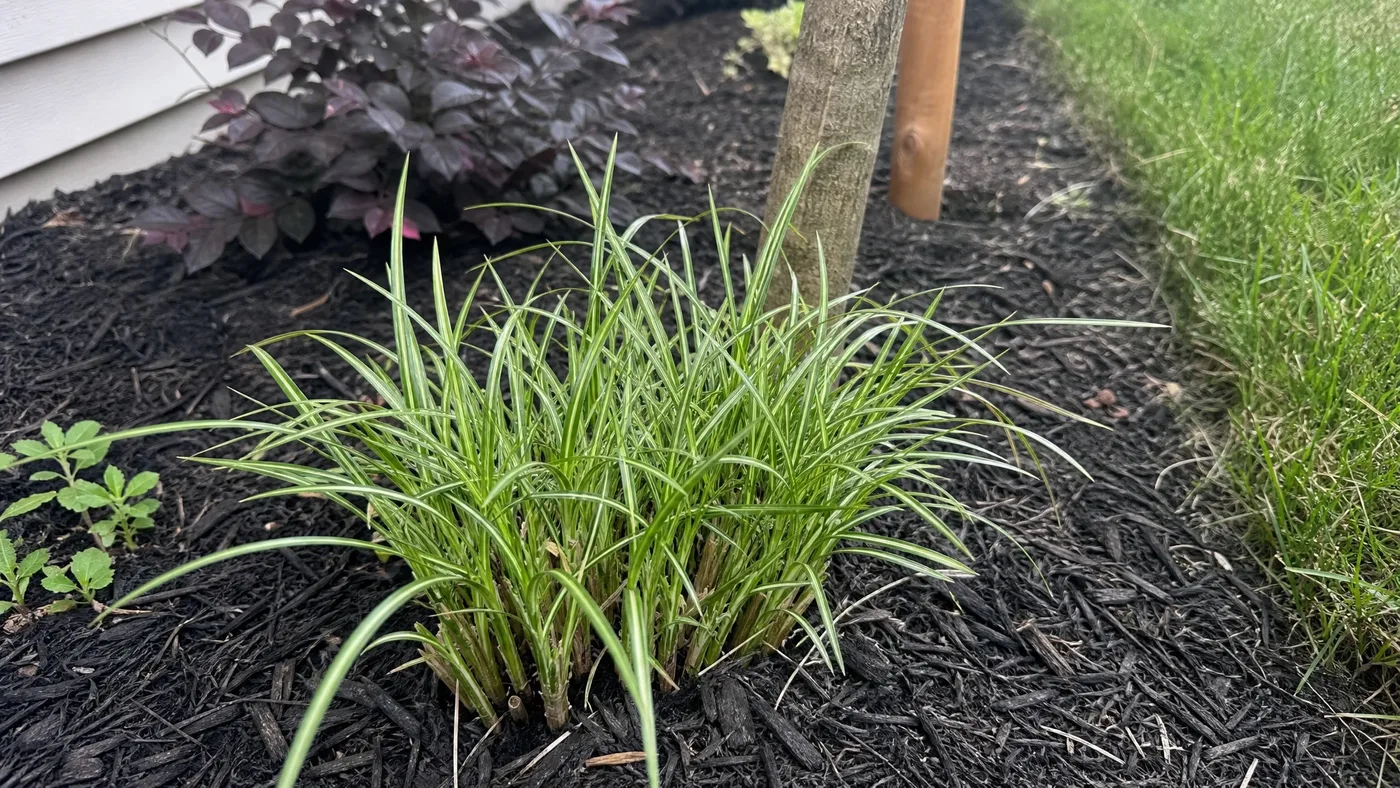
This season, walking our rows near the end of the day, we kept stopping at the same spot. Low evening sun slid across one clump of dwarf maiden grass and caught a pale stripe down the center of every blade, and the whole plant seemed lit from inside. Customers who saw it asked which cultivar it was, and whether every dwarf maiden grass does that.
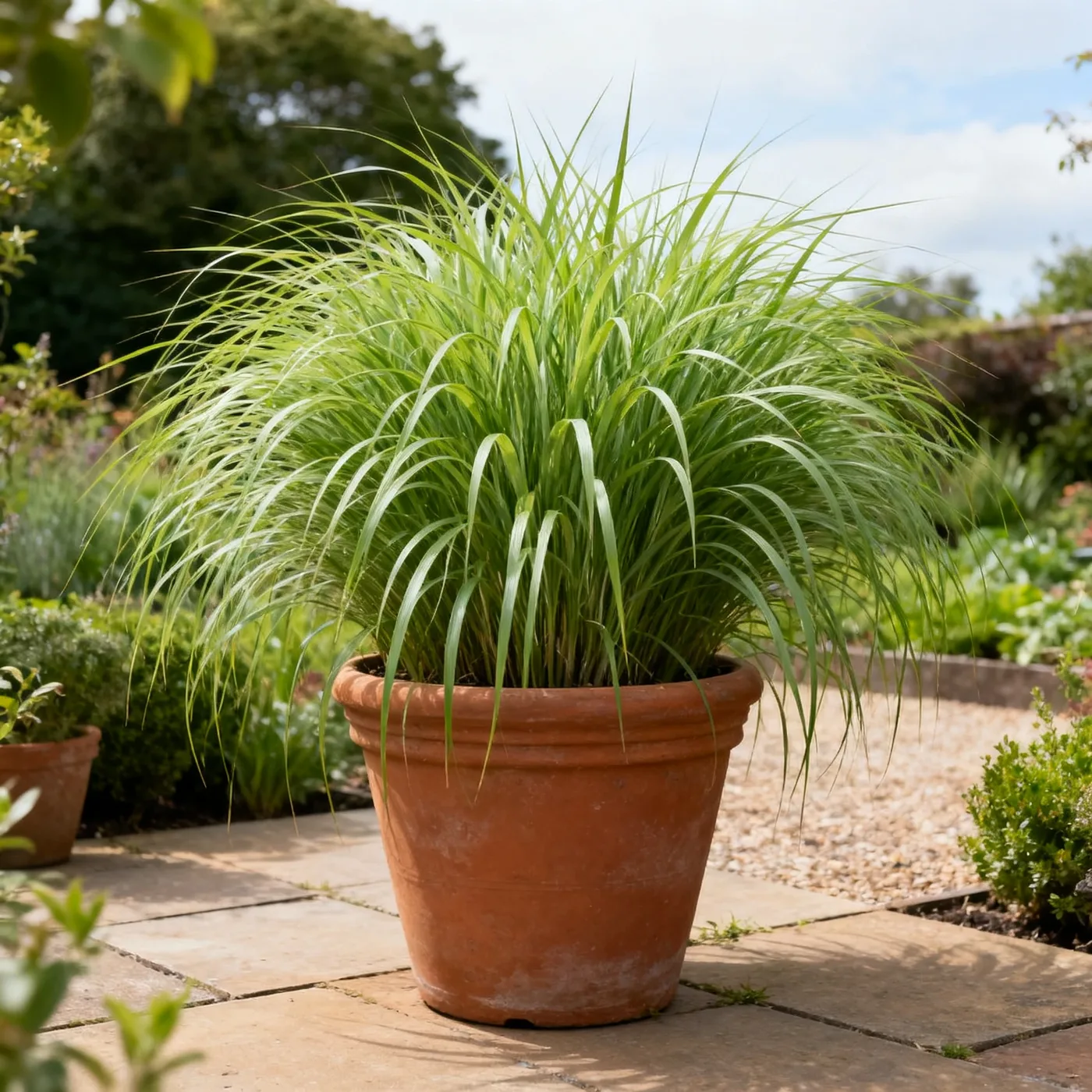
The honest answer is no. Only some dwarf selections carry true leaf variegation, while Adagio and Yaku Jima stay solid green, and that one difference changes how a clump looks from the first spring blades to the last frosted plume.
This guide covers everything you need to know about choosing between striped and plain dwarf maiden grass, from the white midrib of Little Miss and the bolder pale-edged selections to the calm of Adagio and Yaku Jima, plus how stripes handle sun and which plumes sit best above them.
Will Your Dwarf Maiden Grass Lean Toward Stripes or Solid Green?
Pattern is the first decision because it changes how a clump reads from across the yard. A solid green blade fades politely into the background and lets plumes and neighbors take the stage. A striped blade pulls the eye, and it can make a flat corner look brighter before a single plume opens.
What we tell customers is to decide the grass's job before choosing the plant. If it is a backdrop for roses, coneflowers or a busy mixed bed, go solid green. If it is the feature, the one clump people notice from the porch, go striped. Putting both in one small bed usually muddies the effect, so pick one lane.
The table sorts the selections in this guide by leaf pattern, using the advertised and trial figures from the K-State ornamental grass trials. Treat the numbers as ranges, not promises, because height shifts with soil and site.
| Selection | Leaf pattern | Height figure | Advertised zone |
|---|---|---|---|
| Little Miss | White midrib | Check the tag | Check the tag |
| Morning Light | White margins, three white stripes | 84 in (7 ft) advertised | 5 |
| Little Zebra | White horizontal stripes | 48 in (4 ft) advertised | 6 |
| Adagio | Solid green | 49 in (about 4 ft) in trial year 2 | 6 |
| Yaku Jima | Solid green | 70 in (about 6 ft) in trial year 2 | Check the tag |
The table shows a pattern of its own: the boldest stripes belong to larger grasses, and the plain ones are the compact plants, with Yaku Jima as the one plain selection that grew tall. Our mature size guide shows what to plan for in a bed.
Our lean is simple. Choose striped if you have one spot that catches low light and you want a focal point. Choose solid green if the grass should blend into the planting around it.
Little Miss, the White-Midrib Dwarf Maiden Grass
Little Miss is the gentlest of the striped dwarfs. Each narrow blade carries a pale line right down the center, like a seam of light stitched along the green, and the stripe stays thin enough that the clump never looks busy.
Midrib variegation is a trait of the species itself, since NC State Extension notes that Miscanthus sinensis foliage can carry silver, white, cream or yellow variegation on the midrib. Little Miss is the dwarf we point people to for it.
How the Stripe Behaves Through the Day
Up close you see the thin pale line, and a few steps back the stripes blur into a soft shimmer whenever a breeze moves the blades. At midday the effect is quiet. In low morning or evening sun the lines light up and the clump seems to glow from within, which is the look that sends most customers home with this plant.
Because the stripe sits on the midrib rather than the edge, each blade keeps a clean green outline. That makes Little Miss easy to mix with other plants, since it reads as green first and patterned second. Our Little Miss guide covers its size and best uses in more detail.
A Subtle Stripe Is Enough for Most Yards
If you want a grass that rewards a second look without shouting, this stripe is plenty. If you want people to see the pattern from the street, step up to something bolder, which is where the next section goes. For most yards we choose Little Miss, because it gives the lit look without the loudness of a wide white edge.
Dwarf Maiden Grass That Glows Pale at the Edges
Pale-edged selections are the showy end of the striped group. 'Variegatus' is the classic, and K-State describes white variegation on the outer edges of its leaves. 'Morning Light' has narrow green leaves with three white stripes that produce a shimmering silver effect.
The catch is size. Morning Light grows to 84 inches, about 7 feet, and the species itself runs 4–12 feet, so the famous edged grasses are full-size plants, not dwarfs. The one small striped selection in our sources is Little Zebra, advertised at 48 inches (about 4 feet) with white horizontal stripes, a different look from a pale edge.
Pale edges glow brightest against dark backgrounds such as an evergreen hedge, a stained fence or a shaded wall. They also show every flaw, so a ragged or browned blade is far more obvious than it would be on solid green. That is worth weighing if your clump will sit near a path where people look closely.
The choice comes down to room. If you want a bold edge and have the space, a full-size pale-edged grass is the answer, and we would call it honestly rather than a dwarf. If you need a true compact plant, a wide white edge is hard to find, so we steer those customers to the midrib stripe or to solid green. Ask any seller for the mature height before you buy a pale-edged grass labeled dwarf.
Letting Adagio and Yaku Jima Stay Plain
Adagio is the solid green dwarf most people meet first. Its foliage is narrow, and it is a fairly compact variety with an abundance of flower heads. It is also one of the earlier bloomers among the Miscanthus grown side by side in trial, so the plumes come sooner than on many of its relatives, and it reached about 4 feet in its second year.
Yaku Jima is a dwarf form with low seed set, a point in its favor if self-sown seedlings worry you. The surprise is size. K-State says it should stay fairly compact but it ended up as one of the taller Miscanthus in the trial after the second year, at 70 inches, or about 6 feet.
Customers usually ask us whether Yaku Jima is really a dwarf. The name says so, but the plant wants room. A common line is that the word dwarf guarantees a small clump, and it does not, so read the numbers and not the label.
The Case for Calm Foliage
A plain green clump is a frame. It lets plumes show cleanly, gives neighboring flowers a quiet backdrop and has no pattern to fade or burn, so it works almost anywhere the species is happy. Our comparison of Adagio and Yaku Jima sets the two side by side.
Adagio is a full-sun, warm-season grass with an advertised zone of 6, so gardeners in colder climates should confirm hardiness locally before planting. If your garden already has plenty of color, calm foliage serves it better than any stripe. For tight spaces we choose Adagio, and we keep Yaku Jima for beds where a taller, plain clump is welcome.
Do Dwarf Maiden Grass Stripes Survive Your Sun?
All of these grasses are sun lovers. Arkansas Extension says maiden grasses need at least six hours of sunlight, though they tolerate partial shade, meaning 2–6 hours of direct sun. Variegated plants generally lose some of their pattern when light drops, so a striped clump is the one most likely to look plain in a shady spot.
Full Sun and Hot Afternoons
Pale tissue carries less green than the rest of the blade, and in very hot, bright places it can look more stressed than solid green foliage. How much that matters depends on your summers, so check with your local extension service about how variegated grasses do in your climate. We look over the striped clumps first after a hot, dry week, and you can do the same in your own bed.
Where the Striped Plant Can Go
These placements give a striped dwarf the best chance of holding its pattern:
- A spot with at least six hours of direct sun, ideally where low morning or evening light rakes across the blades.
- A position against a dark backdrop, so the pale stripe reads from a distance.
- A bed away from reflected heat off a south-facing wall or paved edge, where pale blades are more likely to scorch.
- A site with good drainage, since the species is adaptable to most well-drained soils.
If your best light is only part shade, choose solid green Adagio and enjoy its plumes instead. Our sun requirements guide goes further into how much light each situation allows.
Dwarf Maiden Grass Plumes Over Striped Foliage
Plumes arrive on different schedules. Arkansas Extension places the species in bloom in late September, while NC State notes that Adagio's flowers are consistent through August. Plume color across the species runs gray or silver, pink, red or burgundy, and white, so check the tag for the selection you buy.
Silver and white plumes echo a pale stripe and give a quiet, glowing clump that suits calm gardens. Burgundy or pink plumes contrast with the white line, and the stripe makes the color look richer. Our bloom time and plume color guide has more on timing and how long the show lasts.
Over solid green foliage, any plume color works, because nothing competes with it. An early bloomer like Adagio starts the show first, and its plumes stand out cleanly against plain blades.
Our combination is striped foliage with burgundy plumes for a single focal clump, and silver plumes where you plant several together for a soft mass. Whichever you choose, give the plumes a plain background so the stripe and the color each get their moment.
Pattern Picked, Plant Chosen
You started with the question of pattern and worked through the choices in order. A subtle midrib stripe is enough for most yards, a bold pale edge means a full-size grass, and solid green Adagio or Yaku Jima is the better pick where calm matters. Striped plants need real sun and a dark backdrop, and the plumes should echo or contrast with the stripe. For most gardens, the plant we would choose is Little Miss.
Plant it where you can stand in the garden at dusk and watch it catch the last light, every blade traced with its pale line and the whole clump glowing a little longer than the sky.
Dwarf Maiden Grass
Nursery-grown Dwarf Maiden Grass in sizes from Quart, shipped to your door.
From $19.99
Shop Now →Full sun and ground that sheds water are all our Dwarf Maiden Grass asks for, and every clump on our farms gets both. We grow and sell top-quality grasses and other plants, tended by us from the first season on. Once you have settled on the striped or white-edged leaf you like best, begin with one of ours.