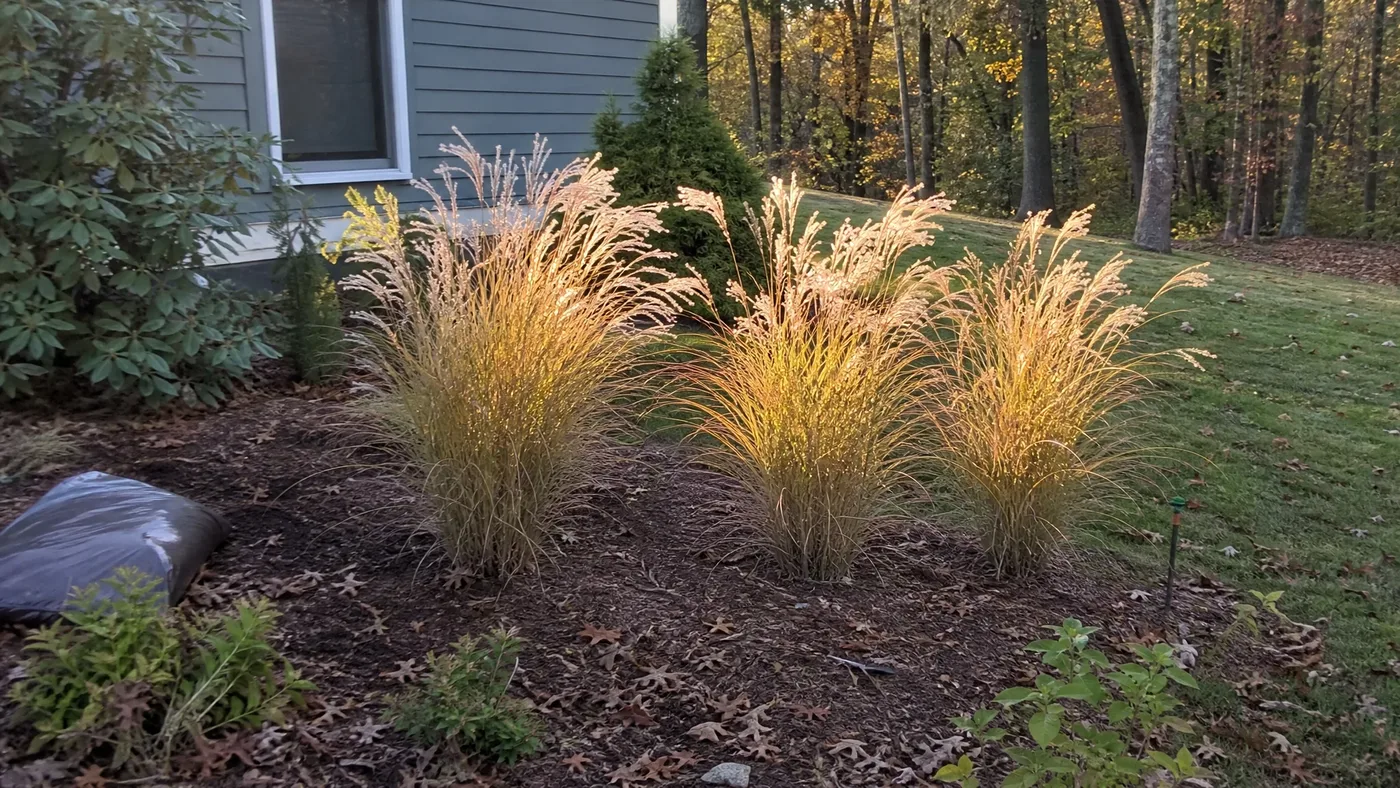
Dwarf Maiden Grass Varieties Compared: Adagio to Yaku Jima
You are holding a pot whose tag says only "compact Miscanthus," and the bench holds four other pots that look nearly identical. Which one do you buy? They are not interchangeable, and choosing by photo is how a 3-foot gap ends up with a clump that wants more room.
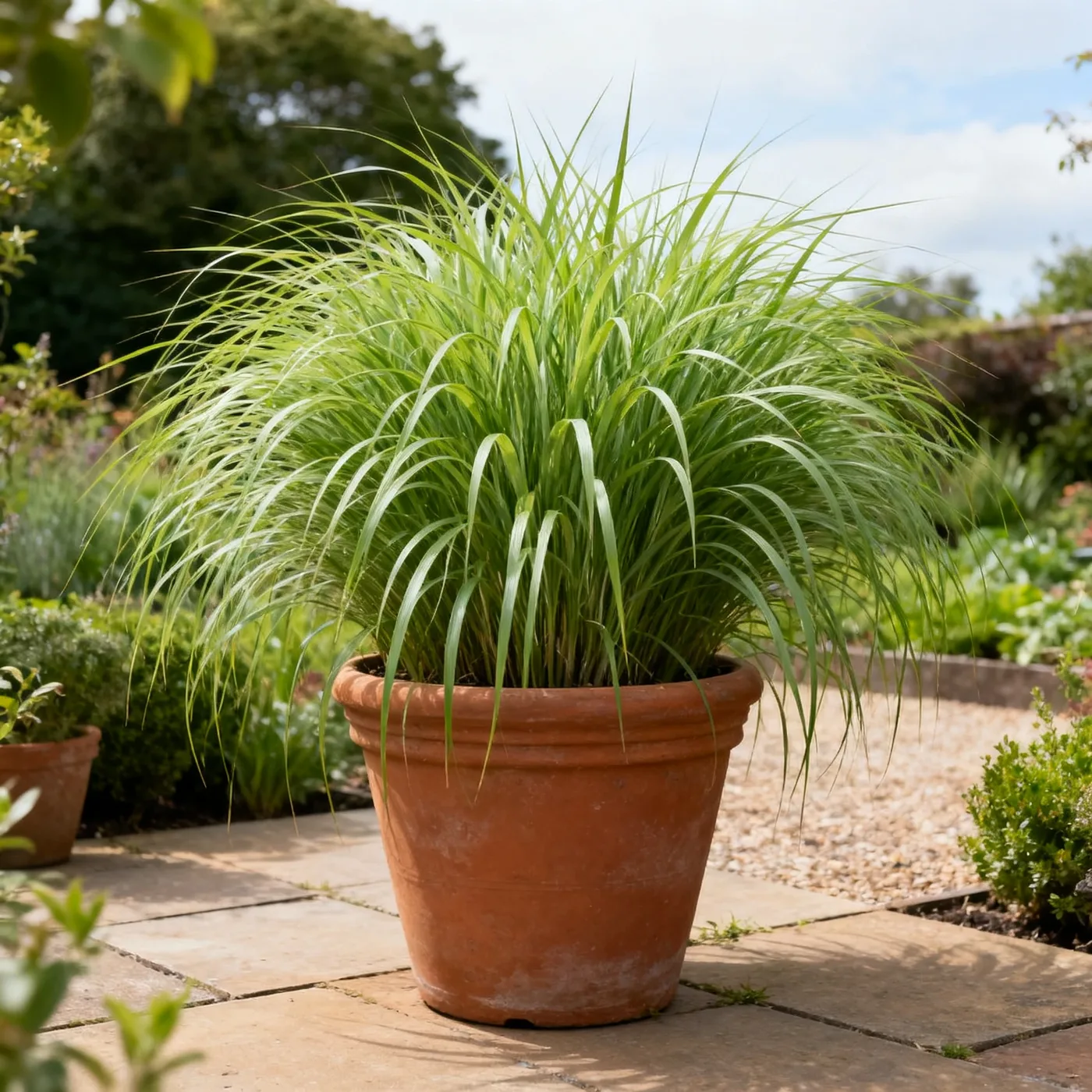
A cultivar is a plant selected and named for a particular trait, then multiplied so every pot carries the same genetics. Think of a family recipe: the same ingredients as the dish it came from, but a specific result every time. Adagio, Little Kitten, Little Miss, Yaku Jima and Kleine Fontaine all start from Miscanthus sinensis and differ in the details.
This guide covers everything you need to know about choosing among them, from mature size and winter hardiness to plume timing, upkeep and the garden jobs each one suits.
Why Dwarf Maiden Grass Selections Differ at All
Line up five young pots in spring and the leaves will look much the same: a narrow green tuft with no hint of plume. The differences only show up over two or three seasons, which is why the tag matters more than the picture.
Two terms help here. A selection is the act of picking one seedling or sport out of many because it does something useful. The cultivar is the named plant that results, propagated by division so it stays true. Every name in this guide is a selection from a species that NC State lists at 4 to 12 feet tall, so "dwarf" is a relative word, not a measurement.
The one idea that sets these five apart is that each selection pulled the species in a slightly different direction. One settled on size, another on bloom timing, another on a low seed set. Yaku Jima, for example, is described as a dwarf form with low seed set, while K-State calls Adagio fairly compact with an abundance of flower heads.
So we judge them on four criteria, in order: size, hardiness, look, and upkeep. Where our sources publish figures for a selection, we quote them. Where they do not, we say so and tell you to check the tag rather than guess.
Mature Height and Spread in Dwarf Maiden Grass
Kansas State trial plants of Adagio measured 36 inches tall and wide in year one, then 49 inches tall by 36 inches wide in year two. That is a useful real number, and it also shows why you cannot read a single figure as "the" size.
How to Read the Numbers
A trial measurement describes a plant at a given age. A catalog figure usually describes a ceiling. Little Kitten reaches a maximum of 1 to 1.5 meters, which is about 3 to 5 feet, and takes 2 to 5 years to get there. So a young Little Kitten is not a stunted one. It is still on its way.
Habit matters as much as height. Little Kitten is clump forming and tufted, meaning it widens from the center instead of running. Our mature size guide covers how a clump fills out over time.
Here is what the sources let us compare.
| Selection | Published size | Habit or note |
|---|---|---|
| Adagio | 49 in. tall by 36 in. wide in year 2 | Fairly compact, trial-measured |
| Little Kitten | Up to about 3–5 ft | Clump forming, tufted, 2–5 years to mature |
| Yaku Jima | Sold as a dwarf form | Check the tag for height |
| Little Miss | No sourced figure | Check the tag for height |
| Kleine Fontaine | No sourced figure | Check the tag for height |
Our Verdict on Size
The most compact selection we can document is Adagio, with a measured 3-foot spread after two seasons. The roomiest is Little Kitten, whose ceiling reaches about 5 feet and which takes years to get there. Plan the space for the mature figure, not the pot you carry home.
Which Cultivar Survives Your Winter Best?
One of the most common questions we get is whether a small grass is automatically a tender one. It is not. Size and cold tolerance are separate traits, and a compact plant can be just as hardy as a tall one.
A hardiness zone is a band on the USDA map defined by how cold an average winter gets at the coldest point. A plant rated to zone 5 should survive the winters of zone 5 and every milder zone. It says nothing about wet soil or late frosts, which is why a zone number is a starting point.
For the species, Arkansas Extension says the hardiest forms grow in zones 4 through 9, while taller, broad-leaved types usually only survive to zone 5. For the group, only one selection has a cultivar-level number in our sources: Adagio, with an advertised zone of 6.
For Little Kitten, Yaku Jima, Little Miss and Kleine Fontaine we have no sourced zone, so we will not invent one. Read the tag, and ask your local extension service which selections overwinter in your area.
Our verdict: in a cold climate, choose the selection whose tag lists the lowest zone and mulch the crown the first winter. In zones 7 through 9, hardiness stops being the deciding factor and you can choose on looks. The hardiness zone guide goes deeper.
Plume Timing and Foliage Character Across the Group
If your garden needs color in August rather than October, timing becomes the deciding criterion. It is the one place where this group has a clear early bird.
Early Versus Late Bloom
Adagio is one of the earlier blooming Miscanthus in the trial planting, and NC State says its foliage is narrow and the flowers are consistent through August. The species as a whole flowers in late September, according to Arkansas Extension, so an August plume is a real head start.
We have no sourced bloom dates for the other four. In our rows, the rule we pass on is to treat any selection without a stated date as a typical late-season bloomer and plan on fall plumes. Our bloom time guide covers how long they last.
Plume Color and Leaf Look
The species produces plumes in gray or silver, pink, red or burgundy, and white, and each selection leans one way. Because our sources do not assign a color to each of the five, judge the plume on the plant in front of you, ideally in September when the heads open.
Leaf look is easier. Adagio has narrow foliage, giving a fine, fountain-like texture. None of our sources describes any of these five as variegated, so a tag promising striped leaves deserves a second look.
Our verdict: choose Adagio for early plumes and a fine texture. For showy versus subtle, we say pick on color in person. A plume you have seen open will not disappoint you the way a catalog photo can.
Soil, Sun and Upkeep Demands of Dwarf Maiden Grass
Plant all five in one bed and you would water, feed and cut them back the same way. That surprises people who expect a separate care routine for each name, but the sources describe the group's needs the same way.
The table shows what is shared and what, if anything, differs.
| Demand | What all five want | Where they differ |
|---|---|---|
| Sun | At least six hours, per Arkansas Extension | Nothing sourced |
| Soil | Most well-drained soils | Nothing sourced |
| Water | Extremely drought tolerant once established | Nothing sourced |
| Cutting back | To the ground in late winter | Nothing sourced |
| Seedlings | Species can self-sow | Yaku Jima has low seed set |
On soil, UF/IFAS says the species is adaptable to most well-drained soils, and Arkansas Extension adds that it is not picky but grows larger and faster in good soil. Better soil means a bigger clump, so if you are squeezing a selection into a tight spot, lean soil helps hold it back. Our soil guide covers amendments.
Pests and disease are light. UF/IFAS says no serious pests are normally seen, though rust can occasionally infest the foliage and often goes away in drier weather. The species is also listed as deer resistant.
Our verdict: Yaku Jima is the easiest keeper by a small margin, because its low seed set means fewer stray seedlings to pull. Beyond that, the five are equally low-fuss.
Matching Each Dwarf Maiden Grass to a Garden Job
A customer once told us their border looked "almost right" because the grass at the front was taller than the plants behind it. That is a selection problem, not a design one, and it is easy to avoid when you start from the job.
Borders and Edging
For the front of a border or along a path, you need the smallest clump you can verify. Adagio, with a measured 3-foot spread, is our best documented choice here. Yaku Jima suits an edge too, since it is sold as a dwarf form, but confirm the height on the tag first.
Containers
Pots punish a plant that outgrows them. Adagio's measured spread makes it the safest bet, and our container growing guide explains pot size and winter care. Little Kitten is a poorer fit, since its 2 to 5 years to maturity means it keeps filling the pot.
Mass Planting and Specimens
For a drift, you want clumps that fill in at a predictable rate. Adagio again, because its numbers are the best documented. For a single standout plant, Little Kitten's higher ceiling gives you presence once it matures. Little Miss and Kleine Fontaine can fill any of these roles, once the tag's mature size matches your space.
A Short List Sorted by Garden Situation
Scan this list against your own garden and stop at the first line that matches. Each point repeats a verdict from above.
- Cold winters: check the tag for the lowest listed zone, and remember Adagio is advertised for zone 6, so treat it as a trial in zone 5.
- A bed about 3 feet wide: Adagio, whose spread was measured at 36 inches after two seasons.
- Plumes by August: Adagio, the earlier bloomer in the trial planting.
- Fewest stray seedlings: Yaku Jima, for its low seed set.
- Room to grow into a taller clump: Little Kitten, up to about 5 feet, if you can wait a few years.
- Undecided between Little Miss and Kleine Fontaine: ask for mature height and spread, then compare against the table above.
Choosing Your Dwarf Maiden Grass With One Real Garden
Picture a reader in zone 6 with a sunny bed 3 feet wide beside a walkway, who wants plumes by late summer. Size points to Adagio, the zone matches its advertised zone of 6, the August bloom fits, and full sun suits it. All four criteria agree, and the choice is done.
Your garden will not agree with every criterion, so rank them. Decide which one you cannot compromise on, usually size or winter, and let that choose. Then check the tag against these criteria before you buy.
Dwarf Maiden Grass
Nursery-grown Dwarf Maiden Grass in sizes from Quart, shipped to your door.
From $19.99
Shop Now →Dwarf Maiden Grass does best in open rows where the sun reaches it all day and the soil drains freely, and that is how we raise every clump on our farms. Each plant we ship comes out of our own rows, grown by the same hands that tend them. If this comparison has helped you settle on a variety, take a look at our shop whenever you are ready to plant.