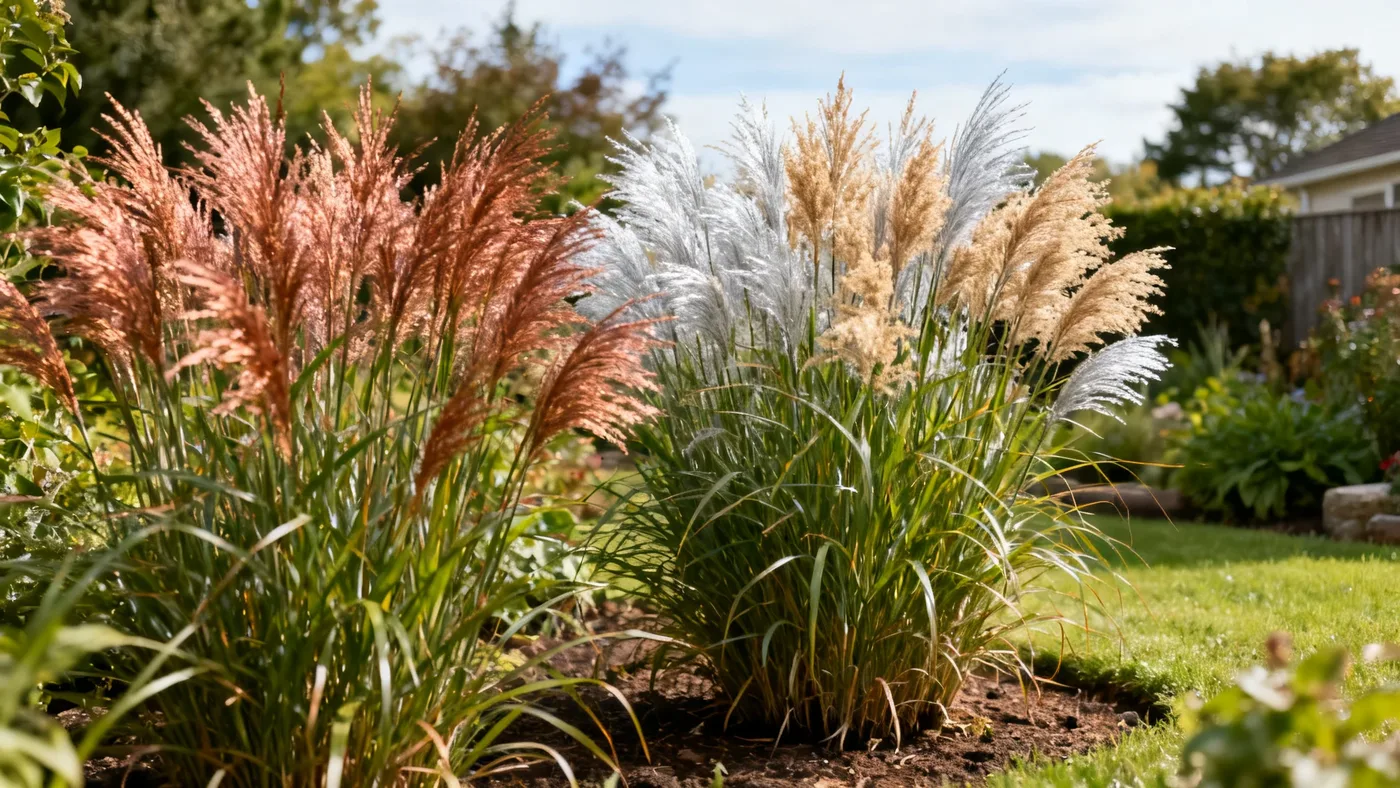
Dwarf Maiden Grass Bloom Time: Plume Color and How Long It Lasts
If you planted Dwarf Maiden Grass this spring or already have an established clump, late September is the moment to watch for. We're in the heart of bloom season right now, and over the next 4 to 8 weeks, your plant will put on one of its most striking displays of the year. Coppery-pink plumes will emerge from the foliage, shift to silvery-white, and gradually age to buff and tan as fall deepens. This extended color show sets Dwarf Maiden Grass apart from many other ornamental plants that fade by October.
Unlike full-sized Miscanthus cultivars that peak in mid-to-late summer, Dwarf Maiden Grass is a late bloomer. It flowers roughly August through October, which means it overlaps perfectly with fall color and provides landscape interest when most perennials are declining. For gardeners in zones 5 through 9, this timing is a significant practical advantage. The plumes often persist through winter, giving you months of visual texture and structure even after frost and cold arrive.
When Dwarf Maiden Grass Blooms
Dwarf Maiden Grass typically begins flowering in late August and continues through October, with the exact timing depending on your USDA hardiness zone and local fall temperatures. In zone 5 areas, expect plumes to emerge by late August or early September. In zones 8 or 9, flowering may start a bit later but often extends further into fall before slowing in early November.
The shift to blooming happens almost on a schedule. Once night temperatures start to drop and daylength begins shortening in late summer, the grass triggers its reproductive cycle. You'll first notice the plume buds pushing up through the foliage, encased in a sheath. Within a day or two of the sheath opening, the actual plume unfurls, immediately showing that distinctive coppery-pink color.
Young plants (first or second growing season) produce their first flowers during this same timeframe. A first-year plant established in spring should be generating plumes by late summer or early fall of that first year, though the display will be lighter than what you'll see in year two or three. Established plants (year two and beyond) produce a noticeably fuller and more impressive plume show because the clump has developed to its mature width of 2 to 3 feet.
One practical advantage of Dwarf Maiden Grass over standard-size Miscanthus is that it blooms earlier relative to its growth cycle. Because the plant reaches only 3 to 4 feet in foliage (4 to 5 feet including plumes), it matures faster and produces plumes sooner, making it an especially rewarding choice if you want a quick payoff in your garden.
Plume Colors: What to Expect and Why They Change
The plumes emerge in a coppery-pink tone that stands out boldly against the green foliage and catches light beautifully in morning sun. This warm, rosy color is what first-time growers notice and love. Over the course of 2 to 3 weeks, the plumes gradually lighten and shift to a silvery-white, a cooler and more subtle tone that still commands attention but in a different way. By late October, they've settled into buff or tan, a warm neutral color that reads more as winter texture than as active color.
This multi-week color progression is part of what makes Dwarf Maiden Grass so visually dynamic. You're not looking at static blooms. The display evolves as the plume flowers mature and harden, and the color shift tracks that maturation closely. Early plumes and late plumes exist on the plant at the same time, so at peak bloom season (mid-September through mid-October), you'll often see all three color stages at once: coppery-pink plumes emerging from new buds, silvery-white plumes at mid-maturity, and buff-colored older plumes. This layered color effect is part of the plant's appeal.
The color intensity also depends on sunlight and plant nutrition. Plants in full sun typically show the most vivid color development and the strongest progression. A plant in partial shade may produce fewer plumes and show more muted color, another reason why full sun is recommended for best flowering and form.
As the foliage itself turns golden tan or bronze in fall, you get a dual-color effect: the aging plumes shift from pink to silver to tan on top, and the leaves beneath them deepen into warm bronze. The combination creates depth and keeps the plant visually interesting for months.
How Long Blooms Last
Once the plumes emerge in late August or early September, they remain on the plant through the end of the year and often persist well into late winter or early spring, when you cut the clump back to 4 to 6 inches above ground. This extended persistence is a major advantage of Dwarf Maiden Grass over many other ornamental plants. While your summer perennials have faded completely and disappeared by November, your Dwarf Maiden Grass is in its strongest visual phase, providing color and structure in the landscape when things would otherwise look bare.
Even after the plumes have faded to buff or tan, they hold their form and remain standing on the plant. This is especially valuable in winter. The dried plumes catch frost and snow, creating crystalline or silvery effects on cold mornings, and the persistent architecture of the entire clump provides visual interest and shelter for overwintering birds and beneficial insects. Leaving the plant standing until late winter or very early spring also protects the crown from freezing and thawing cycles that might damage new growth.
Don't cut the plant back in fall when you see the plumes looking tired or after the first frost. The temptation to clean up is natural, but removing the plumes removes months of winter interest. Instead, wait until late winter or very early spring, just before new growth emerges. At that point, cut the entire clump back to 4 to 6 inches above ground. This timing also allows you to do the work when the plant is breaking dormancy and new energy is mobilizing, not when it's settled in for winter.
Getting the Most from Bloom Season
To ensure your Dwarf Maiden Grass produces the strongest plume display, site it in full sun. While the plant tolerates light part shade, flowering and overall form are best in full sun. A plant in partial shade may produce 30 to 50 percent fewer plumes, and the color development will be noticeably muted.
Water regularly through the growing season, especially from spring through mid-summer, and continue watering if fall is dry. A well-hydrated plant has more energy to dedicate to plume production. Once the plant is established (after 1 to 2 growing seasons), it develops high drought tolerance and can get by on natural rainfall in most climates, but regular water during bloom season still supports the fullest display.
Avoid fertilizing heavily in spring or early summer. Dwarf Maiden Grass is a light feeder. Excessive nitrogen can push the plant toward more foliage and fewer plumes, and it can also cause the clump to flop or splay open, especially in shade or overly rich soil. A single application of balanced, slow-release fertilizer in spring is usually sufficient. If your plant is already growing well, you may not need fertilizer at all.
One common mistake is cutting the plant back too early or at the wrong time. Cutting back in fall removes the plumes and winter interest. Leaving it standing also allows the dried foliage and plumes to serve as insulation for the plant's crown and as shelter for wildlife. For detailed guidance on timing and technique, see the Dwarf Maiden Grass care guide.
Year-One vs. Established Plants
If you've just planted Dwarf Maiden Grass this spring, expect a lighter bloom display in the first year compared to year two or three. The plant is directing much of its energy into establishing a strong root system. You'll still get plumes, and they'll still progress through the full color sequence, but the show may not be as full or as dense as it will be in subsequent years.
By year two and three, when the clump has reached more of its mature width (2 to 3 feet), you'll see a noticeably fuller and more impressive plume display. The plant takes about 1 to 2 years to reach full established status and 2 to 3 years to reach its mature clump size. This is when Dwarf Maiden Grass really earns its place as a focal point or feature plant in the landscape.
Seasonal Transitions in the Landscape
As fall deepens and temperatures drop, the foliage of Dwarf Maiden Grass shifts from green to golden tan or bronze. This color change happens independently of (but alongside) the plume color progression. By mid-fall, you're looking at a plant with bronze-toned foliage and silvery or buff-colored plumes, a striking combination that looks right at home in autumn and early-winter landscapes.
The dried plumes and standing foliage persist through winter in zones 5 through 9. This is not dormancy or decline. It's part of the plant's design and value. The dried plant provides valuable habitat for birds and beneficial insects, and the texture catches light on gray winter days. You can leave it standing until late winter or early spring without any negative impact on the plant's health or vigor.
Quick Reference: Bloom and Seasonal Cycle
| Timing | Plume Stage | Plume Color | Foliage Color | Care Notes |
|---|---|---|---|---|
| Late August to Early September | Emergence | Coppery-pink | Green | Peak emergence; new buds opening daily |
| Mid-September to Early October | Peak bloom | Silvery-white (mixed with pink) | Green to golden-tan | All three color stages visible at once; strongest visual impact |
| Late October to November | Mature | Buff to tan | Golden-tan to bronze | Color fades but form persists; do not cut back yet |
| December to Early Spring | Winter interest | Buff to tan (enhanced by frost) | Tan to bronze | Plumes still standing; provides habitat and winter texture |
| Late Winter to Early Spring | Cutback time | N/A (removed) | Old growth removed; new shoots emerging | Cut entire clump to 4 to 6 inches above ground before new growth fully expands |