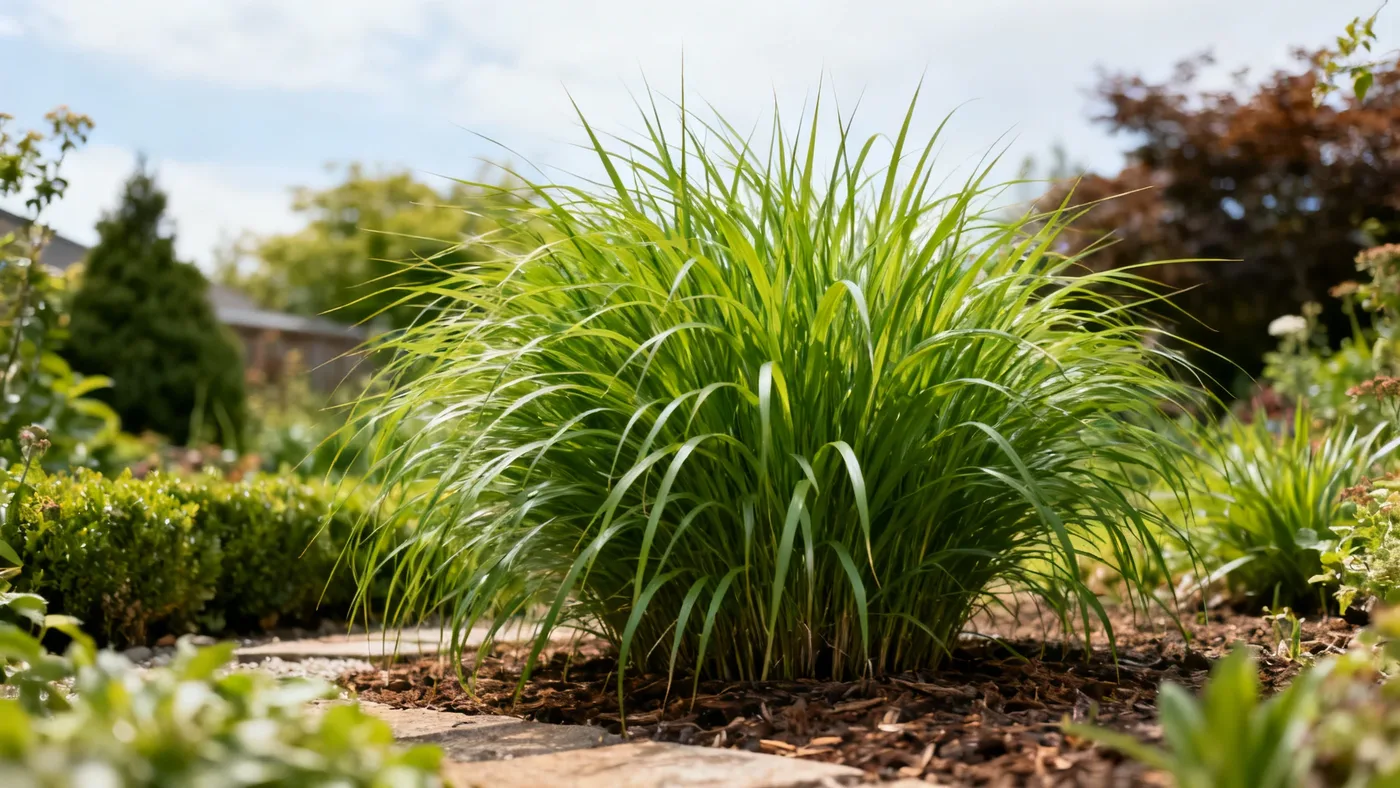
Dwarf Maiden Grass Sun Requirements: Full Sun vs Part Shade
Dwarf Maiden Grass (Miscanthus sinensis 'Adagio' or similar compact cultivars) is known for its graceful fountain-like form and coppery-pink fall plumes. But that striking appearance depends entirely on light. Get the sun exposure right, and you'll grow a dense, upright clump with reliable blooms. Skimp on light, and the plant will thin out, sprawl open, and flower poorly or not at all. This guide walks you through assessing your garden's light, deciding between full sun and part shade, and positioning your new grass for its best performance.
What Dwarf Maiden Grass Sun Requirements Actually Mean
The plant facts are straightforward: Dwarf Maiden Grass thrives in full sun and tolerates light part shade, but flowering and form are best in full sun. This is not a suggestion. The difference between a well-lit plant and a shaded one is dramatic. In full sun, the clump stays compact, reaches 3 to 4 feet tall in foliage (with plumes adding another 1 to 2 feet), and maintains an upright, tidy mound. In too much shade, the same plant may flop open, sprawl sideways, and produce sparse or no flowers at all.
"Light part shade" (the plant's tolerance threshold) means roughly 3 to 4 hours of direct sun daily, or dappled light all day. Anything less, and you will see decline in form and bloom. This is not a plant for north-facing foundations or dense tree shade.
Step 1: Track Your Garden's Light for One Full Day
Before planting, measure light in your chosen spot. You need to know not just morning sun or afternoon sun, but the total hours of direct sunlight your site receives year-round.
On a sunny day, place a stake or marker in the intended planting spot. Starting at sunrise (or 6:00 a.m., whichever is earlier), note when direct sun first hits the area. Then note when shadow moves back over it. Repeat this observation at midday and again in late afternoon to confirm the pattern. Write down the total hours of direct sun. Do this on both a clear day and, if possible, a partly cloudy day to see the variation.
Many gardeners skip this step and regret it. A spot that looks sunny at planting time (spring) may be shaded by a neighboring tree's full canopy by mid-June. A western exposure that receives 6 hours of sun in spring may get intense, heat-reflecting 8 hours by midsummer. Take the time. It matters.
Step 2: Compare Your Light Hours to the Two Tiers
Once you have your hours of direct sun, ask yourself one question: Is this site receiving 6 or more hours of direct sun daily, throughout the growing season?
If yes, you have a full-sun site. Full sun means the plant will grow upright, flower reliably in late summer into fall (roughly August through October), and hold its form without extra support. This is the ideal placement. No hedging, no regrets.
If your site gets 3 to 5 hours of direct sun daily, or dappled light most of the day, you have a light part-shade site. The plant will survive and grow, but expect softer flowering, a looser form, and possible leaning or splaying. This is acceptable in a pinch, but not optimal.
If your site gets fewer than 3 hours of direct sun daily, do not plant Dwarf Maiden Grass there. The plant will decline, yellow, and eventually fail. Choose a shade-tolerant alternative.
Step 3: Scout for Shade Threats (Hidden and Seasonal)
Even if your current spot receives 6+ hours of sun, check for future shade problems:
- Neighboring trees. Will a nearby tree leaf out more fully in 2 or 3 years as it matures? If so, it may cast shade over your grass by mid-June. Position your planting spot farther from the tree, or choose a different site.
- Deciduous trees overhead. A large deciduous tree to the south or west may cast dappled shade in summer but allow full sun in spring and fall. Dwarf Maiden Grass can tolerate this if the total direct sun still reaches 5+ hours daily.
- Structures and fences. A fence, building, or pergola on the west side will cast an increasingly long shadow as the sun moves lower in fall. If this shadow hits your planting site by 3:00 p.m. from June through August, you have lost afternoon sun. Adjust your planting location or timing.
- Reflective heat. If your spot is against a south-facing wall or in a heat-reflective patio surround, you may actually have more-than-full sun. The plant tolerates this, but will require slightly more frequent watering in extreme heat. Monitor soil moisture in peak summer.
Step 4: Understand Why Full Sun Matters for Form
Dwarf Maiden Grass reaches only 3 to 4 feet in foliage height and 2 to 3 feet wide when fully mature (2 to 3 years old). This modest size is one of its great strengths. But a shaded plant will not reach those proportions tightly. Instead, it stretches and thins in search of light, growing taller and more spindly, and the outer stems flop outward.
This flopping is not from wind or poor soil. It is a physiological response to insufficient light. Even if you stake the plant or tie it upright, the underlying problem remains: the crown is not dense enough to hold itself up. It is like a person stretching to see over a fence instead of standing on firm ground.
The solution is not to pamper a shaded plant; it is to move the plant to full sun. If your garden has no full-sun spots, Dwarf Maiden Grass is not the right choice.
Step 5: Confirm Drainage and Soil in Your Full-Sun Spot
Full sun alone does not guarantee success. Dwarf Maiden Grass needs well-drained soil and tolerates a pH between 5.5 and 7.5, with a preference near 6.0 to 7.0. Before planting, test drainage by digging a hole about 6 inches deep and filling it with water. If the water drains within 2 to 4 hours, you have good drainage. If it sits for a day or more, amend the soil with compost or perlite to improve drainage.
In full sun with poor drainage, roots can rot. In part shade with poor drainage, the plant will yellow and decline even faster. Combine these two factors only if you are willing to build a raised bed or mound to lift the crown above standing water.
Step 6: Choose Your Planting Spot and Prep
Assuming you have 6+ hours of direct sun and well-drained soil, mark your planting spot. Clear any weeds, grass, or competing vegetation from a circle about 2 feet wider than your intended plant spacing (if massing, use 2 to 3 feet apart). Loosen the top 6 to 8 inches of soil and, if your soil is heavy clay, work in 2 to 3 inches of compost to improve drainage and structure.
Do not add excessive fertilizer at planting. Dwarf Maiden Grass is a light feeder. Rich, overly fertile soil can actually cause the plant to flop and spread open, even in full sun. Compost for amendment is fine; high-nitrogen fertilizer at planting is not.
What to Expect After Planting
In your first year, a container-grown plant (usually sold in a quart or #1 container) will focus on establishing roots rather than top growth. Do not panic if it looks small. By mid-summer of year 1 or year 2, it should produce its first visible flower spike, especially if planted in spring. These early blooms may be sparse or less dramatic than mature plumes, but they confirm the plant is happy.
By year 2 to 3, the clump will reach its mature size of 3 to 4 feet tall in foliage, with full, dense plumes in late summer and fall. The foliage will turn golden tan to bronze in fall and persist through winter (it is typically cut back in late winter or very early spring). If you have genuinely full sun and good drainage, you will have no regrets.
If your plant is sprawling or flowering poorly by year 2, the most likely cause is inadequate light. Evaluate whether shade has encroached (a neighbor's tree, a fence, or a building casting new shadow). If so, either relocate the plant to a sunnier spot in year 3 or replace it with a truly shade-tolerant species.
Common Mistakes and How to Avoid Them
Planting in part shade because the catalog says "tolerates part shade." Tolerance is not preference. Yes, the plant can survive 3 to 4 hours of sun. But it will never look as good or flower as reliably as it does in full sun. Plant in part shade only if you have no full-sun alternatives.
Ignoring seasonal shade change. A spot sunny in spring is not necessarily sunny in June. Leaf-out on deciduous trees, changing sun angles, and growing neighboring shrubs all shift light availability. Re-evaluate your light in mid-June and again in late August to catch problems early.
Assuming a shaded plant just needs staking. Flopping in shade is not a structural failure; it is a light deficiency. Staking masks the problem without solving it. Move the plant.
Overwatering in full sun because the soil looks dry on top. Full sun does increase evaporation. But Dwarf Maiden Grass, once established (after 1 to 2 growing seasons), has moderate drought tolerance. Water deeply but less frequently. Soggy soil in full sun still causes root issues.
Quick Reference: Sun Placement Checklist
| Light Condition | Direct Sun per Day | Expected Form | Expected Flowering | Recommendation |
|---|---|---|---|---|
| Full Sun | 6+ hours | Dense, upright 3-4 ft clump | Reliable plumes Aug-Oct | BEST CHOICE |
| Light Part Shade | 3-5 hours or dappled all day | Looser, may sprawl slightly | Sparse or delayed blooms | Acceptable if no full-sun option |
| Moderate to Deep Shade | <3 hours | Thin, yellow, drooping | Few or no flowers | DO NOT PLANT |
Dwarf Maiden Grass rewards gardeners who place it in full sun. The plant is tough, adaptable to most soils, and long-lived. But it cannot thrive without light. Invest the time upfront to assess your garden's sun exposure, and you will enjoy years of dense, upright growth and reliable fall color and blooms. For deeper care guidance, see our full Dwarf Maiden Grass care guide.