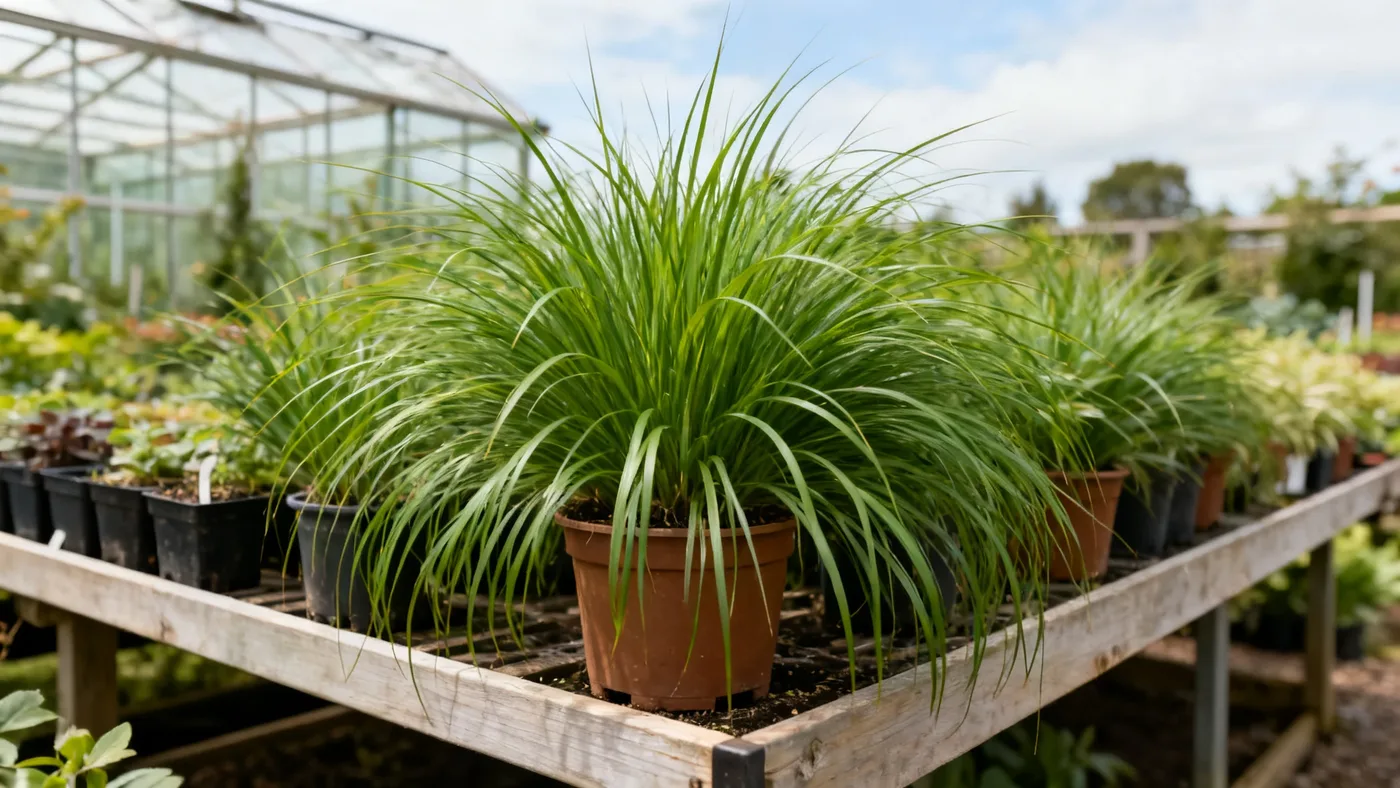
How Big Does Dwarf Maiden Grass Get? Mature Size Explained
The mistake we see with dwarf maiden grass is trusting the word "dwarf." We watch people plant it a foot from a walkway or under a window. Then a 3 to 4 foot fountain of foliage swallows the space, and a 4 to 5 foot wall of plumes follows in fall. The question we hear most is how big it really gets, so here is the straight answer.
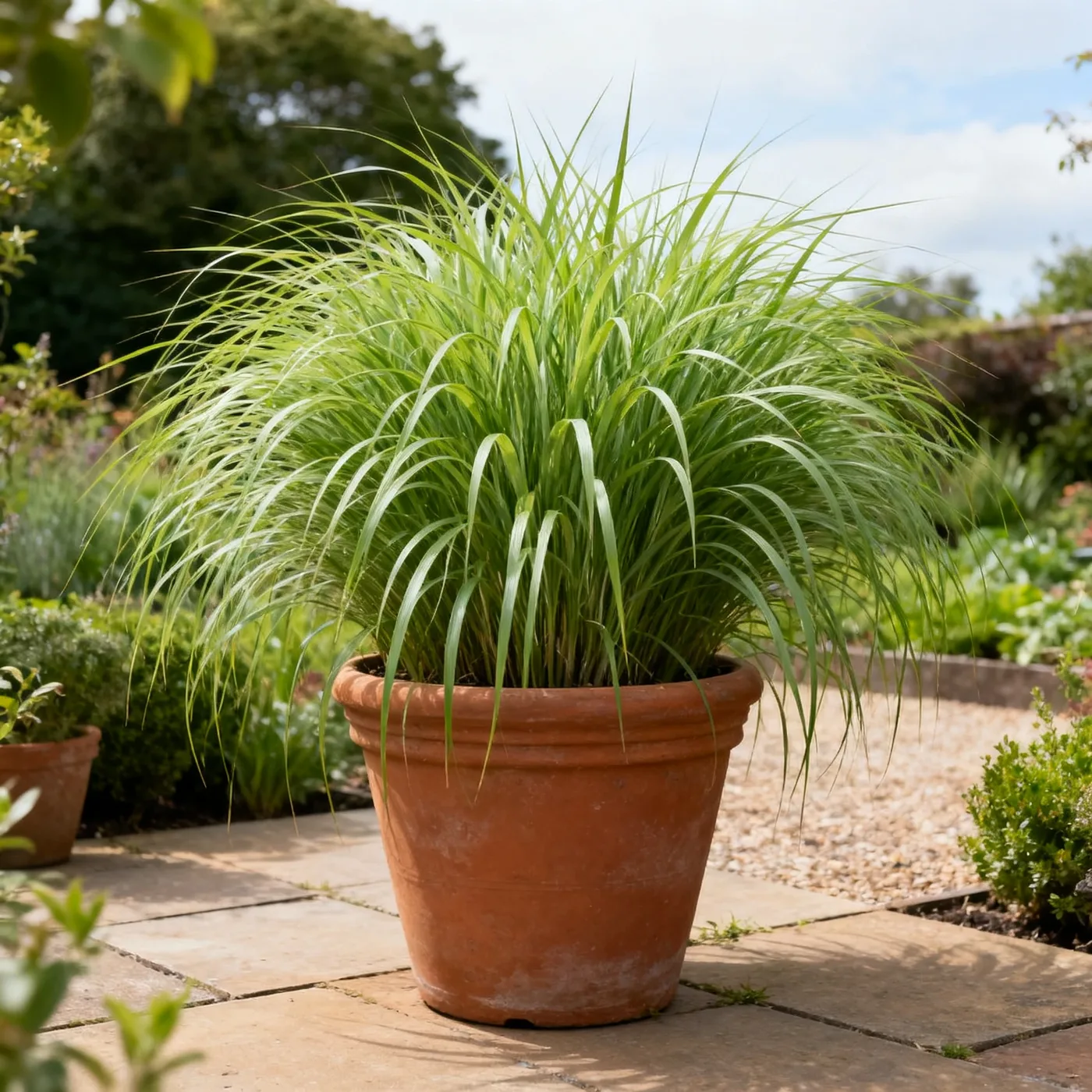
Get the size right and this grass asks for almost nothing. Get it wrong and you end up hacking at a crowded clump that flops and loses its shape. This guide covers everything you need to know about dwarf maiden grass size, from the numbers at maturity to spring spacing, summer growth, fall plumes and the winter cutback.
How Big Dwarf Maiden Grass Gets at Maturity
Start with the numbers, because every other decision follows from them. These are the sizes we see on established clumps in our rows.
How big does dwarf maiden grass get?
Dwarf maiden grass reaches a mature foliage height of 3 to 4 feet, with the flowering plumes extending the total height to 4 to 5 feet. The mature width spreads to about 2 to 3 feet, creating a dense, fountain-like clump. These dimensions can vary slightly depending on which cultivar you receive, since the trade name "Dwarf Maiden Grass" is used by different nurseries for cultivars like Adagio, Yaku Jima, or similar compact selections.
How wide does dwarf maiden grass spread?
A mature dwarf maiden grass clump spreads 2 to 3 feet across. This width measurement is important for spacing multiple plants and ensuring they don't become crowded as they mature. The plant grows outward as well as upward, so you'll want to account for that full spread when planting.
What is the difference between dwarf maiden grass and regular-size maiden grass?
Dwarf cultivars like Adagio and Yaku Jima top out at 3 to 4 feet in foliage, compared to standard Miscanthus sinensis, which the species listing puts at 4 to 12 feet. That difference matters in smaller garden spaces and keeps proportions manageable. You still get the same fine foliage texture and fall color in a more compact package, and Yaku Jima also sets little seed.
Dwarf maiden grass reaches 3 to 4 feet in foliage, making it a mid-size grass compared to taller Miscanthus cultivars (which can exceed 5 to 6 feet) and shorter varieties like Little Kitten or Little Zebra. Fountain grass and switchgrass offer similar heights but often have different forms and textures. Dwarf maiden grass is ideal if you want substantial presence without giant proportions. Little Miss stays narrow-leaved and compact in smaller beds.
Spring: Plant Dwarf Maiden Grass and Space It Right
Plant in spring and give each clump its full footprint from day one. Crowding is the one size mistake you can't fix with pruning.
Pick a sunny, well-drained spot
Choose a site with at least six hours of sun. This grass is adaptable to most well-drained soils, so you rarely need to fuss with the bed. Dig the hole as deep as the root ball and no deeper.
How far apart should I space dwarf maiden grass plants?
Space dwarf maiden grass 2 to 3 feet apart for mass plantings. This spacing matches the mature width of 2 to 3 feet per plant, so adjacent clumps will not overlap or compete for resources. For a tighter, more densely planted bed, use the closer 2-foot spacing, and for a looser, more informal look, use 3 feet.
What we tell customers is to start at 3 feet unless they want a solid hedge. In our rows, plants set 2 feet apart are touching by their third summer. Our spacing guide for borders, hedges and mass planting covers the layouts in more detail.
Can I plant dwarf maiden grass close to other plants?
Yes, but give the dwarf maiden grass at least 2 feet of clear space around its mature width to prevent crowding. Companion plants like Rudbeckia, Sedum, Echinacea, and asters work well nearby, as long as they are placed far enough away to allow the grass clump to reach its full 2 to 3-foot spread. Overcrowding can lead to reduced vigor and a less attractive fountain shape.
Small Gardens and Pots: Keep Dwarf Maiden Grass in Bounds
Not everyone has a wide-open bed. This section covers tight yards and containers, where size planning matters most.
Is dwarf maiden grass too big for a small garden?
At 3 to 4 feet tall and 2 to 3 feet wide at maturity, dwarf maiden grass fits well in most residential gardens and is specifically bred to be more manageable than standard sizes. However, in very small spaces (less than 4 feet by 4 feet available), you may find it competes visually with other plants. For tight quarters, consider a single specimen plant positioned strategically rather than a mass planting.
What size container do I need for dwarf maiden grass?
A large patio container (at least 15 to 20 gallons, or roughly 18 to 24 inches deep and wide) works well for dwarf maiden grass. The plant's dwarf size makes it well suited to large containers, and you can achieve a mature clump in the same 2 to 3-year timeline as in-ground planting. Ensure the container drains well and is large enough that the clump does not become severely root-bound.
Fill the pot with a free-draining mix and set it where it gets full sun. Our guide to growing dwarf maiden grass in pots and patio containers covers mixes and watering.
Will dwarf maiden grass outgrow its pot?
A well-chosen large container can house a mature dwarf maiden grass clump for many years without major restriction. The plant stabilizes at 2 to 3 feet wide, and a sufficiently large pot accommodates this. If the plant becomes severely pot-bound or the center thins over time, you can divide it and repot the divisions into fresh soil to refresh the planting.
Summer: Let the Clump Fill In
Summer is the easy part. The clump does its filling out without help, and your job is mostly to leave it alone.
How fast does dwarf maiden grass grow?
Dwarf maiden grass is a moderate grower, not fast or slow. The plant reaches about 1 to 2 feet of spread per year over 2 to 3 seasons before settling into its full mature size. Once it reaches full maturity, the clump holds steady and does not continue expanding indefinitely.
A dwarf maiden grass plant typically reaches its full mature clump size in 2 to 3 years from planting. This timeline gives the plant three growing seasons to expand to its final 2 to 3-foot width and 3 to 4-foot height. After that, the clump stabilizes and you can plan your garden layout around its permanent dimensions.
Will dwarf maiden grass eventually outgrow its intended space?
No, dwarf maiden grass reaches its mature size of 2 to 3 feet wide and 3 to 4 feet tall in 2 to 3 years, then holds steady. Unlike some plants that gradually expand year after year, this grass plateaus at maturity. Every 3 to 4 years, if the center of the clump begins to thin, you can rejuvenate it by division.
Does rich soil make dwarf maiden grass grow taller or wider?
Overly rich, fertile soil can encourage flopping or splaying of the clump, which ruins the compact form you want. Dwarf maiden grass is a light feeder and thrives in average moisture with well-drained soil, so we don't follow the advice to feed it heavily. One application of balanced, slow-release fertilizer in spring is usually plenty, and it keeps the plant sturdy and well-shaped.
Can I keep dwarf maiden grass smaller by pruning?
Don't prune during the growing season, because the plant needs its foliage for energy production. The only real pruning is the annual late-winter cut to remove the previous year's dried material. Plenty of advice says to shear the clump in early summer to keep it shorter, and we don't follow it. Shortening the plant mid-season leaves an untidy look and may weaken it.
Customers usually ask us whether a summer haircut keeps the plant smaller. It doesn't. Choose the right spot and spacing at planting instead.
Fall: Enjoy the Dwarf Maiden Grass Plumes
Fall is the payoff. The plumes open, the plant gains height, and the clump looks its best.
When does dwarf maiden grass first bloom?
Dwarf maiden grass typically blooms in its 1st to 2nd year from planting, which is earlier than its schedule for reaching full foliage maturity. The coppery-pink to silvery-white plumes appear in late summer into fall, roughly August through October. Even young plants contribute seasonal interest, though the clump continues to expand in size and density over the next year or two.
In a Kansas State trial, Adagio was one of the earlier-blooming Miscanthus. Expect plumes sooner than on standard maiden grass, which flowers in late September in Arkansas.
How tall are the flowering plumes on dwarf maiden grass?
The flowering plumes add 1 to 2 feet to the plant's foliage height, bringing the total from 3 to 4 feet up to 4 to 5 feet at peak bloom time. The plumes are the showy part of late-season interest, extending above the fine-textured green foliage. The exact height varies by cultivar and growing conditions.
Plan for that extra foot if the plant sits near windows or sightlines. Measure to the top of the plumes, not just the foliage, before you settle on a spot.
Winter: Leave It Standing, Then Cut It Down
Winter is when this grass asks the least of you. Leave it up for the cold months, then cut it down once, in late winter.
How does dwarf maiden grass look in winter?
In winter, the foliage turns golden tan to bronze, and the dried plumes persist, creating strong architectural interest. Dwarf maiden grass is typically left standing through winter rather than cut back until late winter or very early spring. This winter persistence is one reason we love this plant. It earns its space for multiple seasons.
We skip the fall cleanup that many guides recommend. Standing foliage looks good and protects the crown. Our cutback guide covers timing in more detail.
Will dwarf maiden grass get smaller in winter?
The plant retains its structure through winter, although the foliage gradually browns and dries from late fall onward. The clump does not shrink. It simply changes color from green to tan and bronze tones. In late winter or very early spring, cut the whole clump to the ground before new green shoots show, and fresh growth will emerge from the base.
Can I divide dwarf maiden grass to control its size?
Division is a useful tool for rejuvenating an aging clump, but it does not control or limit the plant's mature size. Each division grows back to the same 2 to 3-foot width and 3 to 4-foot height. Divide in early spring, every 3 to 4 years, if the center of the clump begins to thin out. It's a maintenance task, not a size-reduction strategy.
Quick Reference: Dwarf Maiden Grass Size at a Glance
Use this table as a quick cheat sheet for the sizes and timing covered above.
| Measurement | Dimensions |
|---|---|
| Mature foliage height | 3–4 feet |
| Height with plumes | 4–5 feet |
| Mature width | 2–3 feet |
| Time to mature size | 2–3 years |
| Spread per year | 1–2 feet |
| Recommended spacing | 2–3 feet apart |
| First bloom | Year 1–2 |
| Plume color | Coppery-pink to silvery-white |
| Bloom time | August–October |
| Winter cut-back height | To the ground, in late winter |
For more care details, see our dwarf maiden grass care guide, which covers planting, watering, pruning, and troubleshooting common growth issues.
Plant Dwarf Maiden Grass Once and Let It Fill In
Dwarf maiden grass tops out at 3 to 4 feet in foliage and 4 to 5 feet with plumes, in a clump 2 to 3 feet wide. Plant it 2 to 3 feet from its neighbors in spring, skip the heavy feeding and the summer shearing, and cut it to the ground in late winter. After that, it holds its size.
Dwarf Maiden Grass
Nursery-grown Dwarf Maiden Grass in sizes from Quart, shipped to your door.
From $19.99
Shop Now →Customers come back to us for dwarf maiden grass because the clump they plant in spring ends up the size we said it would be by its third season. We grow our ornamental grasses on our own farms and sell only top-quality plants.