Yaku Jima Dwarf Maiden Grass: Size, Hardiness and Garden Use
A customer called us with a roll of string pulled tight along 30 feet of fence line and one question: "How many of these do I need to fill it, and will they still be there after winter?" It's a good question, and the answer hangs on a number most people never check, which is how wide a Yaku Jima clump gets.
Plant too few and the gaps take years to close. Plant too many and you pay for grass that crowds itself. We'll walk you through the site and the mature size, then the spacing math, the plant count and budget, the zone check, the first year and the plume timing, with Adagio set beside Yaku Jima wherever the two differ.
Thirty Feet of Edge and a Plan
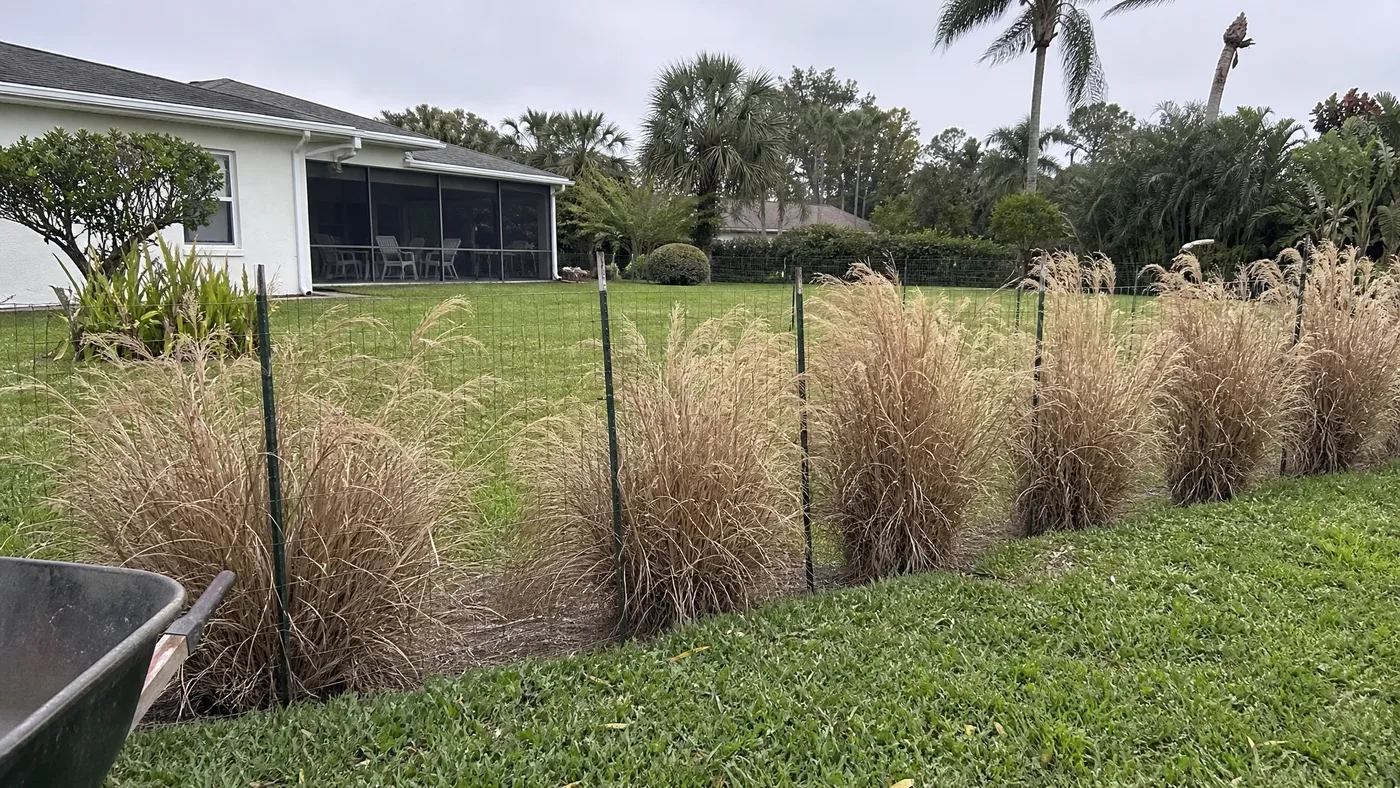
Here is the job we'll follow all the way through. A 30-foot wooden fence runs along the back of a yard, and the strip in front of it gets sun most of the day. The soil is ordinary garden loam that drains after rain. The owner wants the base of the fence covered, something that looks finished by late summer, and nothing that needs trimming more than once a year.
Sun is the first thing to confirm, and it's the one people guess at. Arkansas Extension says maiden grasses need at least six hours of direct sun, and a fence casts a longer shadow than you expect. Stand there at mid-morning and again at mid-afternoon before you commit. A strip that gets six hours in July and four in September will give you floppy plants and thin plumes.
Written down, the goals for this hedge look like this:
- A soft, grassy screen that hides the bottom of the fence without hiding the fence entirely.
- One cultivar all the way down the line, so every clump grows and blooms at the same pace.
- A single cutback in late winter and no other routine work.
- Plants that deer ignore. The species is deer resistant, which is one less thing to build around.
We'd choose Yaku Jima for this. Adagio is a fine grass, but for a long straight line we want the plant whose size we can pin to a number. That choice is explained next.
Yaku Jima Dwarf Maiden Grass at Mature Size
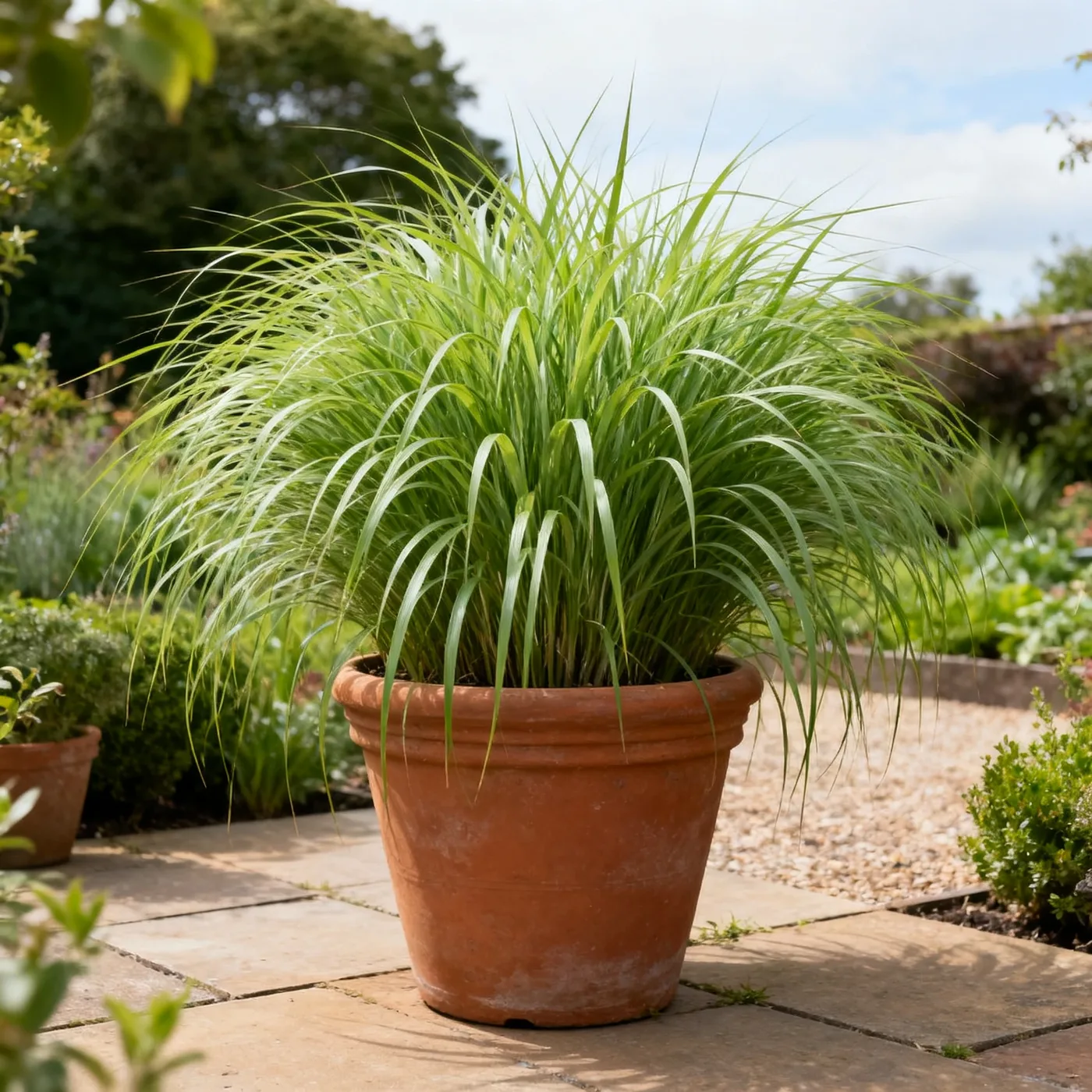
'Yaku-jima' has a maximum height of 1 to 1.5 meters, which is about 3–5 feet. That sets the height of our hedge. It is tall enough to cover a fence base and the lower rails, but you will still see the top of a 6-foot fence over it.
Spread is where we have to be honest. The sources we trust give a height for this cultivar but no spread. The species grows 4 to 6 feet wide, and a compact selection should sit under that ceiling, so treat 4 to 6 feet as the upper limit and not the expected figure. Ask the grower for the actual spread on the tag, or check with your local extension service.
The habit helps a hedge. It is clump forming and tufted, which means it widens slowly from a tight crown and doesn't run. Its profile also reads "Dwarf form. Low seed set." Along a fence, that means you won't be pulling seedlings out of the neighbor's flower bed.
Adagio sits in the same compact class. K-State calls it a fairly compact variety with plenty of plumes, but gives no spread we can quote. Our mature size guide covers the size question for the whole group.
Doing the Spacing Math for 30 Feet
Spacing is the mature spread, measured center to center. If a clump ends up 4 feet across, plants set 4 feet apart just touch at maturity. Divide 30 by that number, round up, and you have your count. This table shows what a few spacings do to the plant count.
| Spacing | Plants for 30 feet | What you get |
|---|---|---|
| 3 feet | 10 | Closes fastest, but clumps crowd by the third or fourth year |
| 4 feet | 8 (30 ÷ 4 = 7.5, rounded up) | Clumps meet at maturity with room to breathe |
| 5 feet | 6 | Cheapest, with visible gaps for several seasons |
We'd pick 4 feet and buy 8 plants, which works out to about 3 feet 9 inches apart once you spread them evenly along the line. The 4 to 6 foot species width is the reason we don't go to 5. A compact clump is unlikely to stretch that far, so you would be waiting on gaps for nothing.
Plenty of advice says to plant close for an instant hedge. We'd rather you didn't. Crowded clumps compete, flop sooner and make the late-winter cutback harder, and you gain a season at best. Our spacing guide for borders and hedges has more layouts.
Here is where Adagio would change the count. If the Adagio tag lists a narrower spread than your Yaku Jima, say 3 feet, the same line takes 10 plants. A wider spread means fewer. The method is identical, so do the division with the numbers on the tag in your hand.
Counting Dwarf Maiden Grass Plants, Then Dollars
The count is 8. We can't quote prices, since they change by container size and by where you shop, so here is the budget as a formula you can fill in with a real quote.
- Plants: 8 times the price of one plant in the container size you choose. Larger containers cost more per plant and close the line a little sooner, but with only 8 plants the difference adds up quickly.
- Mulch or compost: a thin layer along a strip 30 feet long and as wide as the planting bed. Local suppliers will quote you by the bag or the yard.
- Water: the first season only, and mostly from a hose you already own.
- Fertilizer: nothing. We cover this in the fertilizer guide, but the short version is that a plant on decent soil rarely needs it.
Notice what isn't on the list. We didn't budget for a spare plant, and we wouldn't. If one clump fails in the first year, you replace one clump, and by then you'll know why it failed. Buying 10 to cover a loss that probably won't happen is how people end up with a crowded line.
One of the most common questions we get is whether to start with smaller plants to save money. You can, with the understanding that the hedge will take longer to look finished. Soil matters here too. The University of Arkansas notes these grasses will grow larger and faster in good soil than poor, so a bag of compost worked into the strip can do more than an extra plant would.
Zone Check Before Anyone Digs
Check the winters before you spend a dollar, because a hedge that dies back to a few stubs is no hedge at all. Hardiness sources disagree a little. The species grows in zones 5a through 9b, UF/IFAS says 4 through 9, and Arkansas Extension says the hardiest forms will grow from USDA zones 4 through 9, while taller and broad-leaved types usually only survive to zone 5.
None of our sources states a zone for Yaku Jima specifically. Adagio has an advertised zone, which we have as zone 6. For our example, say the fence sits in zone 6. That is inside every range above, so it passes. If you're in zone 5, we'd still plant it, but mulch the crowns the first winter and put the clumps where snow can't be shoveled onto them. In zone 4, ask your local extension service which compact selections they have seen survive.
Our hardiness zone guide goes deeper on the edge cases. The practical point for a hedge is that cold is not the main way these grasses die. Wet feet in winter do more damage than low temperatures do. Maiden grass adapts to most well-drained soils, and a fence line where meltwater pools is the one spot we'd skip. Put a hand's width of extra soil there or move the line.
What Dwarf Maiden Grass Does in Year One
Expect very little drama. The clumps will green up late, because this is a warm-season grass, and then spend the first summer building roots. The cultivar takes 2 to 5 years to reach maturity, so the string line won't be full in year one. Plan for that, and don't judge the hedge before the second summer.
Water, Then Back Off
Water deeply and regularly while the plants get established, then stop pampering them. Arkansas Extension says that once established, these grasses are extremely drought tolerant. The usual mistake runs the other way, with people watering a settled clump every few days and getting soft, floppy growth for their trouble. Our watering guide covers the timing.
What Not to Fuss Over
Leave these alone:
- Fertilizer. See above.
- Brown tips or a few streaky leaves in a wet summer. UF/IFAS says rust occasionally infests the foliage but often goes away in drier weather, and it reports no serious pests on the plant.
- Small plumes. A first-year clump will bloom lightly, if at all, and that is normal.
- Dividing. The clumps are far too young.
The only chore is the cutback. Cut the clumps to the ground in late winter, before new growth starts, and haul the stubble off. Our planting guide covers getting them in the ground right, and the single best thing you can do is set each crown at the same level it sat in the pot.
Plume Timing Along the Hedge Line
Yaku Jima carries feathery, pink-flushed, creamy-silver plumes held well above the foliage in late summer and autumn. Think late summer into fall, not midsummer. Arkansas Extension puts the species in flower in late September, so the exact week depends on your climate and your sun.
Adagio runs earlier. Its flowers are consistent through August, and it is one of the earlier-blooming Miscanthus in the trial. If you want plumes on the fence by the end of summer, Adagio is the better choice. If you can wait for fall and want the pink flush, Yaku Jima is ours.
Along the line, all eight clumps will open within days of each other when they're the same cultivar and get the same sun. In our rows, the clump at the shady end is usually the last to open, so expect a ragged edge for a week or two. That is the reason we don't mix Adagio and Yaku Jima in one hedge. The staggered bloom reads as a mistake and not as a design.
Once they open, the plumes ride above the foliage and catch low light, so the line looks its best in the evening. Leave them standing through winter if you like, then cut it all down in late winter. Our bloom time guide shows how long they last.
Dwarf Maiden Grass Hedge, Tallied Up
The final tally for the 30-foot fence: 8 Yaku Jima plants at about 4 feet apart, a cost of 8 times the tag price plus a little mulch, and 2 to 5 years before the line fills in completely. It reaches about 3 to 5 feet, blooms in late summer and fall, and needs one cut a year. Our zone 6 example passes the hardiness check with room to spare.
What to skip next time: the spare plants, the fertilizer and the urge to plant at 3 feet because the gaps look sad in June. The string was the best tool in the whole job, and you can keep it for the next fence.
Dwarf Maiden Grass
Nursery-grown Dwarf Maiden Grass in sizes from Quart, shipped to your door.
From $19.99
Shop Now →Young Dwarf Maiden Grass on our farms gets a deep soaking all through its first summer, and after that we back off and let the roots take over, the same routine your new hedge would follow. We ship only top-quality grasses we would plant ourselves. When your string is stretched along the fence line, see the plants we have ready for it.