How to Transplant Dwarf Maiden Grass Without Losing the Clump
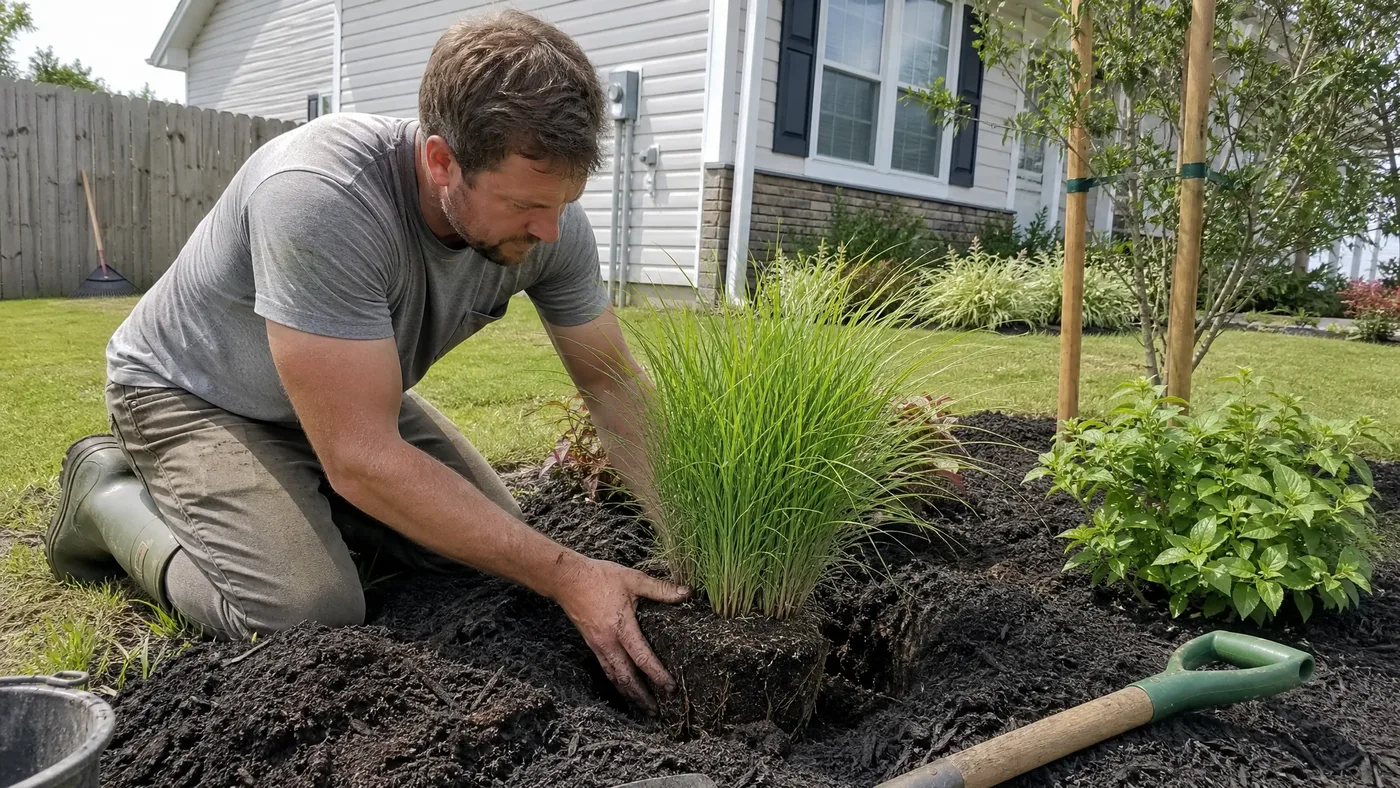
About 3 to 4 feet is how wide a mature dwarf maiden grass clump gets, and that number decides whether a move goes smoothly. The clump is a dense mound on a shallow, fibrous root mass, so it comes out of the ground as a manageable slab rather than a deep root you have to chase. Yet you will read that grasses can only be moved in one narrow window, usually with no hint of where that rule came from.
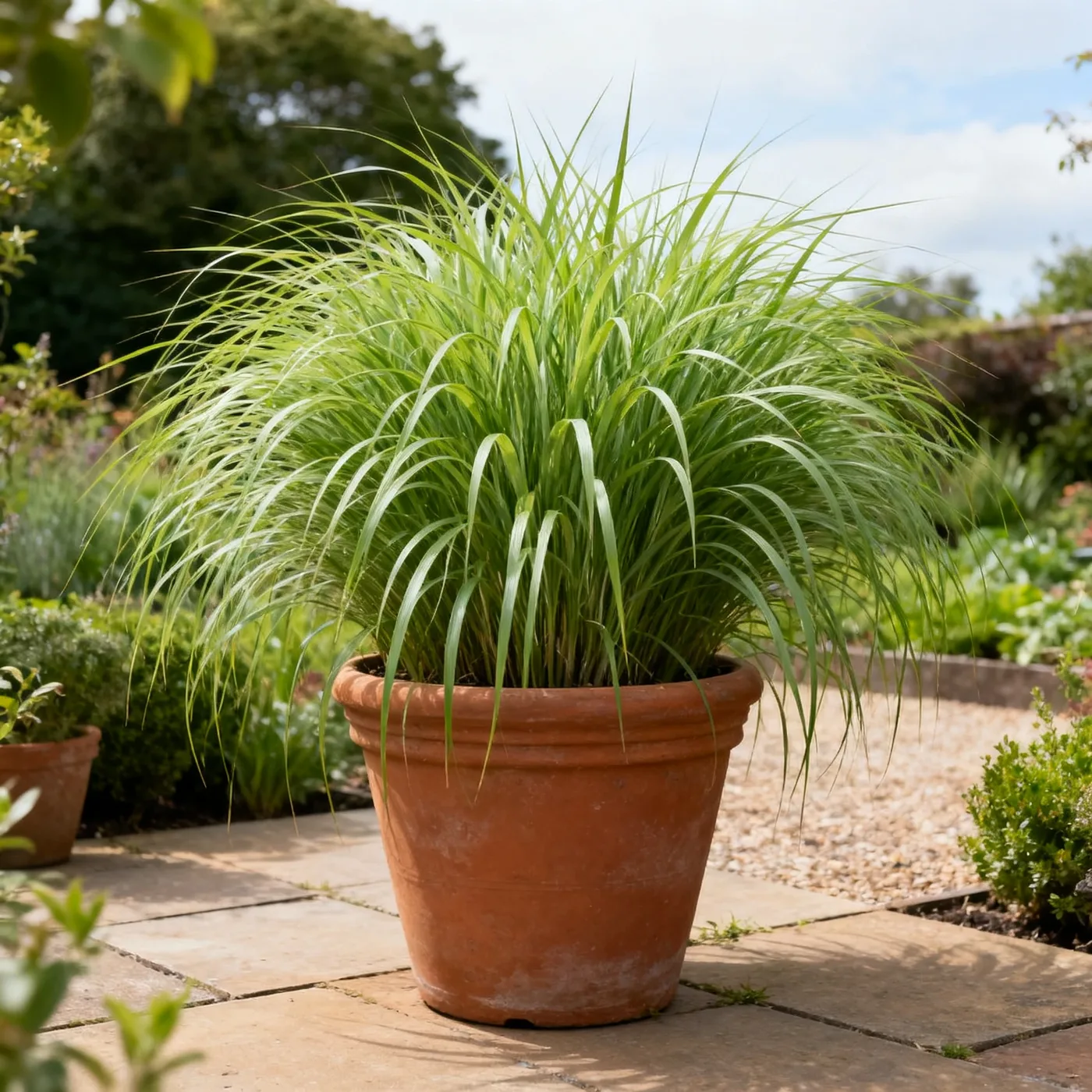
Most of it traces back to the 6-foot standard types, which are heavier and slower to recover. A compact selection like this one is more forgiving, though not careless. In this article, we'll go through the signs that tell you when to lift, how to size the root ball, how hard to cut back first, and the watering that carries the clump through its first season.
Does Dwarf Maiden Grass Really Resent Moving?
Trace the "grasses hate being moved" rule back and you mostly find big, old clumps. There is no easy way to get a big old clump out of the ground because the root system is so tough. That is a complaint about labor, not about the plant's temperament. A clump that fights the spade is hard to lift whole, and a torn, half-sized root ball is what makes a move fail.
Dwarf maiden grass sits at the easy end of that problem. Its roots are shallow and fibrous, the mound is about 3 to 4 feet across, and it re-establishes much faster than the 6-foot types. UF/IFAS describes Miscanthus sinensis as a warm season grass that transplants best in the spring. Notice what that says. It names a preference, not a prohibition.
So our verdict is that the plant does not resent moving. It resents three things: a ruined root ball, a dry one, and a crown buried too deep. Everything below is built to avoid those. If your real goal is more plants rather than a new location, that is a different job, covered in our guide to dividing dwarf maiden grass.
Choosing the Day to Lift the Clump
Timing advice comes in two flavors. One says move grasses in fall, while the soil is warm. The other says wait for spring. For a warm-season grass the second wins, and the sources agree: the Johnson County office calls late winter or early spring the ideal time to cut back and divide grasses, and the same logic covers moving a whole clump. A warm-season grass starts growing when the soil warms, so a spring move lets it rebuild roots as it wakes up.
Signs the Clump Is Ready
Calendar dates shift by region, so watch the plant and the soil instead. We tell customers to lift when all of these are true:
- The ground has thawed and crumbles in your hand instead of smearing, because wet soil tears the root ball apart as you dig.
- The old foliage is still tan and the base shows no green shoots, which means the clump is still dormant.
- Hard freezes are behind you, or at least no longer forecast for a week or more.
If shoots have already pushed an inch or two, you can still move it, but the window is closing. Customers usually ask us whether summer is out of the question. Not strictly, but a clump in full leaf loses water faster than a bruised root ball can supply it, so we would not choose it.
Settle the New Spot First
Pick the destination before you dig. Arkansas extension says these grasses need at least six hours of sunlight, and a clump that was shaded out of its old spot should not land in another shady one. Our sun requirements guide covers the trade-offs.
Sizing the Root Ball Without Guesswork
You will find root ball charts keyed to plant height or trunk width. They were written for trees and tall shrubs, and they translate poorly to a mounding grass whose height says little about how far its roots reach. Following a chart, people tend to carve a ball so small that it slices through the very roots feeding the clump. That is the skeptic's reading of the charts: they give you a number without a reason.
The practical measure is the clump itself. In the K-State trial, 'Adagio' measured 49 inches tall by 36 inches wide in its second year, and the root mass sits under that mound. Take the whole footprint: set your spade just outside the point where the outermost stems leave the ground, and your ball will be about as wide as the clump, plus the width of the blade on each side.
For depth, don't chase a number. Because the roots are shallow and fibrous, you are done going down when your spade slides under the entire mat and the clump rocks free. Mark the circle with a hose or a ring of flour before the first cut so you commit to the full width instead of nibbling in from the edge.
If the ball turns out heavier than you can handle, shave soil off the sides and bottom rather than cutting roots shorter. Weight comes from soil, and soil is the part you can spare.
Cutting Dwarf Maiden Grass Back Before the Move
Does a pre-move haircut help? The usual claim is that it spares the plant shock by balancing leaves against lost roots. We think the real benefit is practical. Colorado State's PlantTalk says to cut the foliage back to 4 to 6 inches before digging, and that works well for moving too. A dormant clump has no green leaves to lose water anyway, so the cut mostly gives you a clean view of the crown and a bundle of stubble to grab.
How short should you go? Stay with the 4 to 6 inches. Some extension sources say to cut plants to the ground, which is fine for the yearly tidy-up, but for a move the stubble marks where the crown sits and gives you a handle. It also shows you the depth you need to match later in the new hole. Our cutting back guide covers the annual routine.
Use sharp loppers or hedge shears and wear gloves, since dry leaves are rough on bare hands. Haul the clippings away. And don't trim the roots at the same time. The foliage cut is a convenience. Roots are the plant's whole supply line, and you want every one you can keep.
Digging and Carrying the Clump Intact
Colorado State's advice for any grass is simply to dig the entire clump up from the ground. For a dwarf clump that is a half-hour job with the right order of work. Dig the new hole first so the clump never waits out in the open.
Lifting the Clump
Work in the order below, with a sharp round-point spade and a tarp laid next to the plant.
- Water the clump lightly the day before if the soil is dry, so it holds together without turning to mud.
- Cut a vertical trench along your marked circle, pushing the spade straight down all the way around.
- Work around again and angle the spade under the mat until it begins to loosen.
- Rock the clump gently and slide the tarp under one edge, then tip the whole clump onto it.
- Check the underside. Healthy roots are white or tan and fibrous, and they should still be holding the soil.
Wrapping and Moving It
Pull the tarp up around the root ball and tie it loosely at the stubble. Drag it or use a wheelbarrow rather than lifting by the foliage, which can tear the crown. If the new spot is across the yard, that is the whole trip. If it is farther away, keep the wrapped ball out of direct sun and wind, because exposed fibrous roots dry in a surprisingly short time. Replant the same day.
Setting Dwarf Maiden Grass in Its New Hole
Make the hole noticeably wider than the root ball but no deeper than the ball is tall. Set the clump in so the crown, where the stubble meets the roots, sits level with the surrounding soil. In our rows, the clumps that sulk are almost always the ones planted too deep. A buried crown stays wet and sends up weak shoots, while a slightly high crown settles into place after the first watering.
Backfill with the soil you dug out. Arkansas extension says these grasses are not picky about soil but grow larger and faster in good soil, so there is no need for a rich mix, and a pocket of fancy amendment can trap water around the roots. If your soil drains poorly, read our guide to soil, drainage and amendments before you plant.
Firm the soil by pressing with your hands and water in as you fill, rather than stomping, which compacts the surface and leaves air pockets lower down. Then spread mulch up to 3 inches deep to protect the replanted grass, and keep it pulled back from the stubble so the crown stays dry. The rest of the routine matches our planting guide.
Skip fertilizer, since it only pushes growth the damaged roots cannot yet support. Our fertilizing guide explains when feeding does make sense.
Watering and Watching the First Season
Water deeply the moment the clump is planted, then keep the root zone evenly moist as shoots emerge. A moved clump has lost part of its root system, so it cannot yet reach the drought tolerance of an established plant. Arkansas extension calls established plants extremely drought tolerant, and that is the goal, not the starting point. Our guide to watering from establishment to maturity has the long-term schedule.
Check with a finger rather than a calendar. If the top few inches are dry in the weeks after spring emergence, soak the clump slowly instead of sprinkling it. Ease off as growth fills in and the weather cools. Overwatering is a bigger risk than underwatering in heavy soil, because a soggy crown rots.
The plant tells you how it is doing, and the table below sorts the signals you are likely to see.
| What You See | What It Means | What To Do |
|---|---|---|
| Green shoots around the whole crown | Roots are working | Keep watering as the soil dries |
| Slow, thin shoots | Normal for a moved clump | Wait and keep the soil evenly moist |
| Brown leaf tips in hot weather | Root ball is running dry | Soak deeply, then mulch |
| Yellowing, soft base | Crown is too wet or too deep | Pull mulch back and check drainage |
| Clump leans or lifts | Loose in the hole | Press soil in firmly and water |
Give a slow starter time before you judge it. Warm-season grass wakes late.
What a Moved Dwarf Maiden Grass Tells You
The next spring is the real report card, and it is a modest one. If shoots come up evenly around the full crown, the root ball was big enough and the planting depth was right. A bare side suggests the roots on that side were lost in the dig, and it usually fills in over a season. Plumes may be fewer in the first fall, since the plant spent its effort on roots.
Be honest about what that shows: one clump in one yard is a single case, not proof of a method. What we can say is that a compact, shallow-rooted grass moved dormant, with its full footprint and a level crown, has everything in its favor.
Dwarf Maiden Grass
Nursery-grown Dwarf Maiden Grass in sizes from Quart, shipped to your door.
From $19.99
Shop Now →Dwarf Maiden Grass is happiest in open ground where the sun lands on it from morning to night and water drains away freely, and our farm rows are laid out just that way. Anything leaving them has to pass a simple test: would we set it in our own beds? Once your clump is divided and settled, come and see the plants we have ready.