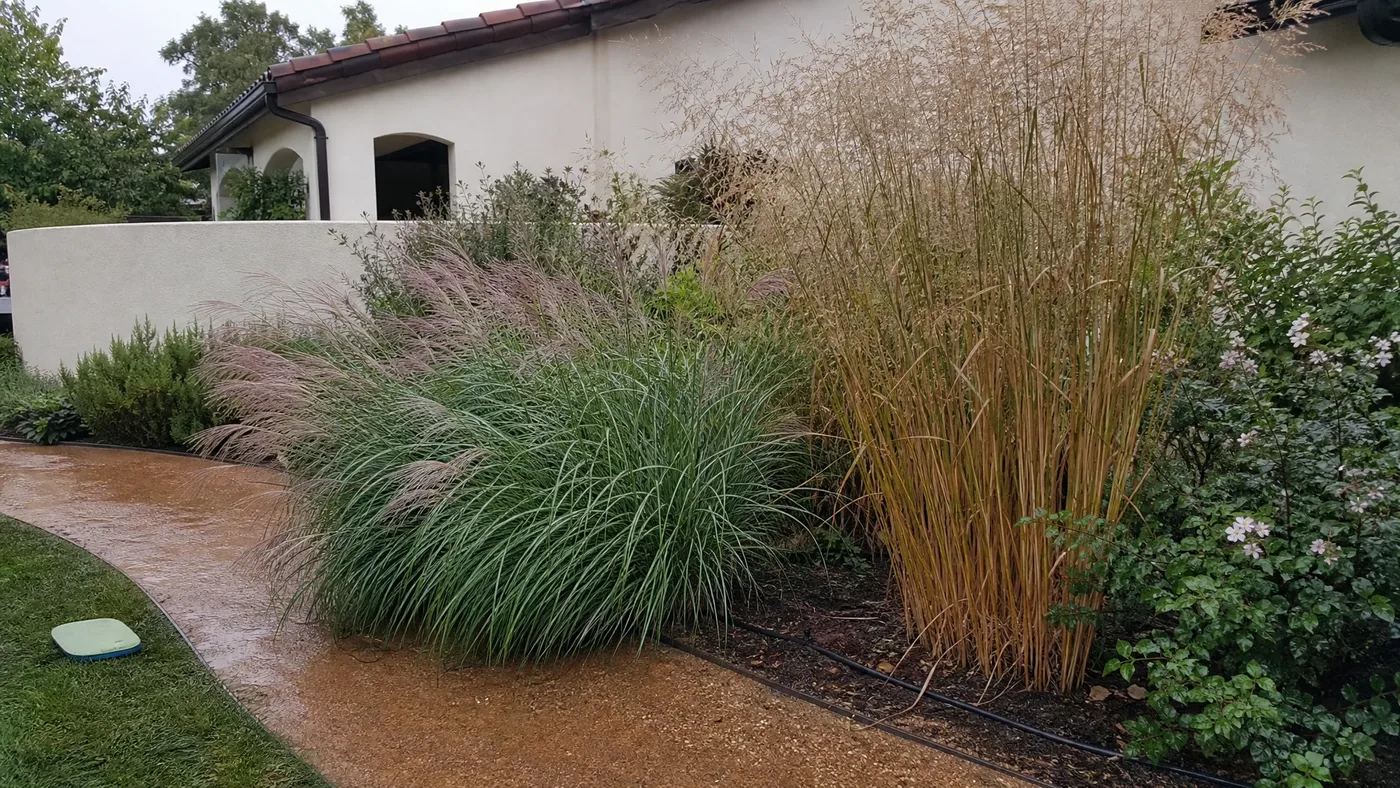
Dwarf Maiden Grass vs Switchgrass: Growth Habit and Plumes
Picture a prairie in late summer. One grass stands straight as a fence post, and another spills over its own edges like a fountain. Which one did you actually picture? If it was the upright one, you were most likely seeing switchgrass, a North American native. The fountain belongs to East Asia, where the species behind Dwarf Maiden Grass grows wild.
That difference in origin explains most of what separates the two in a border: how they hold their shape, what soil they like and who comes to visit. Choose wrongly and you get a stiff column where you wanted softness, or a thirsty plant on a dry bank. Read on for a side-by-side of form, plumes, moisture, native value, winter looks and cut-back timing, with a plain recommendation for each kind of border.
Dwarf Maiden Grass Fountains Against Switchgrass Columns
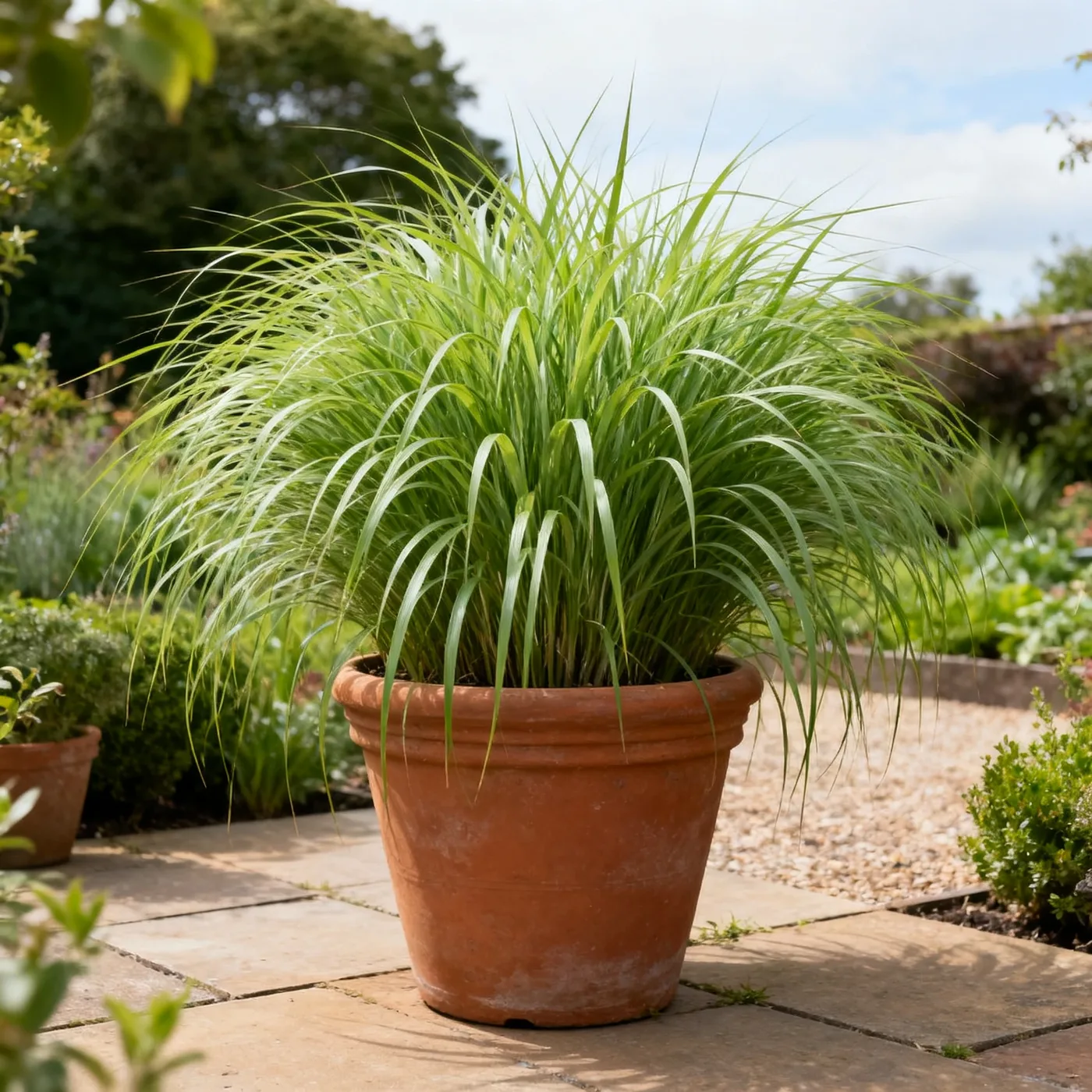
Dwarf Maiden Grass makes a 3 to 4 ft fountain. Narrow leaves rise from the center and arc outward until the tips droop, so the clump reads as one rounded mound. The species it comes from runs 4 to 12 ft, which is why we steer people to a compact selection like 'Adagio', one K-State calls fairly compact with plenty of flower heads.
Switchgrass is built the other way. It forms a dense columnar clump that reaches 3 to 4 feet in leaf and up to 7 feet with its flower plumes, spreading slowly through creeping rhizomes. The leaves stay upright instead of falling outward, so the plant takes less width and claims more air above it.
Here is how the two shapes compare in a bed.
| Trait | Dwarf Maiden Grass | Switchgrass |
|---|---|---|
| Habit | Arching fountain | Dense upright column |
| Height in leaf | 3 to 4 ft | 3 to 4 ft |
| Height with flowers | Plumes ride above the arch | Up to 7 ft |
| Spread | Clump that widens outward | Slowly, by creeping rhizomes |
| Best placement | Front or middle, softening edges | Middle or back, adding height |
The switchgrass figures are for the species. If you want a shorter switchgrass, read the plant tag for its mature height, because we will not guess at a selection's size for you. A fountain spills over a path edge, and a column holds a corner. Customers usually ask us whether switchgrass is just a taller maiden grass, and the answer is no, the two do different jobs.
Dwarf Maiden Grass Plumes and Switchgrass Seed Haze
Dwarf Maiden Grass saves its show for the end of the season. The plumes are silky and fairly dense, held just above the arch of leaves. Across the species, flower colors range from gray or silver to pink, red or burgundy, and white, and they soften toward fluffy silver as they age.
Timing is where the cultivar departs from its species. Arkansas Extension says the species flowers in late September, but 'Adagio' was described by NC State as having flowers consistent through August, and K-State rates it one of the earlier bloomers in its Miscanthus trial. Our bloom time guide covers how long the show lasts.
Switchgrass does it differently. Its foliage has a bluish cast in summer, and the flower panicles are finely textured, pink-tinged and branched, hovering over the leaves like a cloud. You see through them instead of looking at them. Where maiden grass plumes are objects, switchgrass panicles are atmosphere, and each reads best from a different distance.
Put them together and you get two bloom moments. Switchgrass sets its haze up in summer, and the maiden grass plumes follow as the season turns. If you want one clear focal point in a small bed, the plume wins. If you want movement behind other perennials without blocking them, the haze wins.
Dry Borders Against Damp Ground
Moisture decides this contest more often than looks do. Both grasses want full sun, but they come from different conditions and they say so.
Where Switchgrass Pulls Ahead
Switchgrass prefers moist clay or sandy soils, is slightly salt tolerant, and withstands occasional flooding. It will also grow near black walnut. A low spot where water lingers after a heavy rain is switchgrass territory.
Where Dwarf Maiden Grass Holds Its Own
UF/IFAS calls maiden grass adaptable to most well-drained soils, and lists occasionally wet conditions among those it tolerates. Arkansas Extension adds that once established, it is extremely drought tolerant. A sunny slope or a hot strip beside pavement suits it well.
People often assume a native is automatically the tougher plant. On a dry, baked bank, the source we trust for maiden grass gives it the stronger drought record, while the switchgrass source leans moist. Matching the plant to the water is the whole job.
Soil quality still matters for both. Arkansas Extension says maiden grass is not picky but grows larger and faster in good soil, and our soil guide covers drainage in detail. If your yard stays soggy for long stretches, ask your local extension service before planting maiden grass, and our drought guide shows how far its dry-weather strength goes.
Where Dwarf Maiden Grass Comes From, Where Switchgrass Does
Maiden grass belongs to East Asia. The native range of Miscanthus sinensis runs from China to Malaysia and the Russian Far East to temperate East Asia, which spans a huge range of climates. That helps explain why the species adapts to so many gardens.
Switchgrass is a prairie grass of North America. It grew here long before anyone planted it on purpose, among the other native grasses and wildflowers it still looks right beside. A native planting that features switchgrass fits the regional landscape in a way a Chinese grass cannot.
Hardiness follows from this. The species is listed for zones 5 to 9 by NC State and 4 to 9 by UF/IFAS, and Arkansas Extension says the hardiest forms reach zone 4 while taller, broad-leaved types usually stop at zone 5. In a cold garden, check the zone for the exact plant you are buying, and our hardiness guide explains the details.
One more difference for the ecology-minded: seed. The dwarf form 'Yaku Jima' sets little seed. Whether maiden grass seedlings are a concern varies by region, so ask your local extension service what they see nearby before you plant it near a natural area.
Wildlife Value of a Native Prairie Grass
Here the native wins, and we say so without hedging. Switchgrass has a documented ecological role in North America that a transplanted Asian grass has not built up. The three things a wildlife gardener looks for are easy to compare.
- Seeds: Leave switchgrass seed heads on the plant, because they give birds and small mammals a winter food source. Maiden grass does not offer this, and 'Yaku Jima' sets little seed.
- Host plant: switchgrass hosts the caterpillars of various skipper butterflies and the Common Wood-Nymph, which has one brood from late May to October. Our maiden grass sources list no such role.
- Cover: both form dense clumps that stand through winter, so both give some shelter at ground level. We have no source on nesting for either grass, so ask your local extension service which birds nest in grass clumps near you.
Maiden grass does have practical strengths. Deer tend to leave it alone, and it normally has no serious pests, though rust can occasionally infest the foliage and often goes away in drier weather.
If wildlife is your main goal, plant switchgrass. If it is one goal among several, a maiden grass fountain beside it costs the wildlife little, since both can share a border.
Winter Looks: Dwarf Maiden Grass Pale, Switchgrass Tan
Both grasses stand through winter, and that is a reason to grow either one. The difference is the palette.
Switchgrass turns attractive shades of yellow-orange in fall, and the leaves then fade to light brown and persist through winter. The upright clump holds that tan color in a column, with the seed heads giving birds something to work at in the cold.
Dwarf Maiden Grass bleaches. The leaves lose their green and the plumes pale, so the clump becomes a cream-colored fountain that catches low winter light. It keeps an arching shape under snow better than you might expect, though heavy wet snow can pull the leaves down. Our winter care guide covers what to do about that.
We tell customers to leave both standing until late winter. Cutting in fall removes the best months of the show and, with switchgrass, the winter food. The common advice to tidy grasses in autumn is a habit, not a need.
When Each Grass Gets Its Spring Haircut
Both grasses are cut in late winter, so the calendar looks the same. Arkansas Extension advises that you cut the plants to the ground and haul the stubble off to the compost pile before seeds disperse and new growth begins. The same late-winter window fits switchgrass.
The difference is what you wait for. With maiden grass, set a date around the end of the cold and cut before new shoots rise through the old leaves. With switchgrass, let the winter feeding run its course first, then cut just ahead of the new growth.
Use sharp loppers or hedge shears, and gather the leaves into a bundle first so they do not scatter. A dwarf clump is small enough that the job takes minutes. Our cut-back guide walks through the steps, including how low to cut.
Choosing Dwarf Maiden Grass or Switchgrass for Your Border
Choose Dwarf Maiden Grass for a dry, sunny edge where you want a rounded fountain, silky plumes and a pale winter shape. Choose switchgrass for damp ground, a native planting, or a tall upright accent at the back. In a mixed bed, use the maiden grass in front and the switchgrass behind it.
Either way, the picture to hold onto is simple: birds working the switchgrass seed heads in the cold while the maiden grass glows pale beside it.
Dwarf Maiden Grass
Nursery-grown Dwarf Maiden Grass in sizes from Quart, shipped to your door.
From $19.99
Shop Now →Out on a Dwarf Maiden Grass row of ours, the clumps get a bright, open spot and loose soil that never stays soggy, the setup that suits it best. Because we grow and sell top-quality grasses as a small business with our own farms, we only pass along plants we would be glad to set in our own borders. If you have decided how the maiden grass and switchgrass will share your bed, come and see what we have growing when you are ready to plant.