Little Fountain Dwarf Maiden Grass: Size, Habit and Best Uses
Picture the plot plan of your lot with one empty bed circled in pencil and a single question written beside it: what size of grass can that circle actually hold? Choose too big and the clump leans over the walkway by its second summer. Choose too small and the bed looks bare from the street.
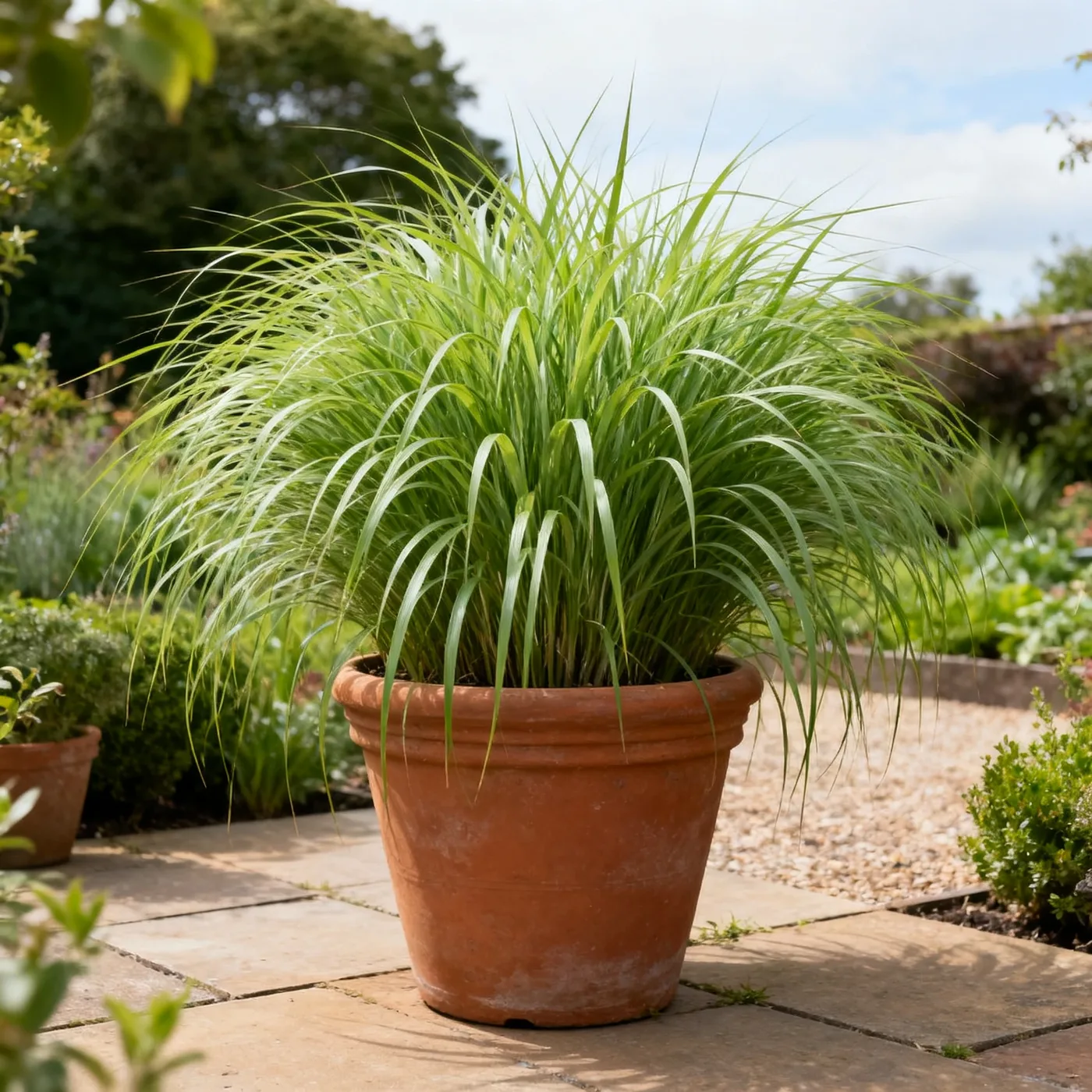
Little Fountain dwarf maiden grass, sold under the cultivar name 'Kleine Fontaine', is a strong answer for many of those circles. It stays far narrower than the species and throws its blades outward in a soft fountain, with plumes that change color as the season turns.
Below, you'll find out all about Little Fountain's size and habit, including how it compares with Adagio, what to do when the clump reads wide, how the plumes and blades look, and which placements to skip.
Placing Dwarf Maiden Grass in the Whole Landscape
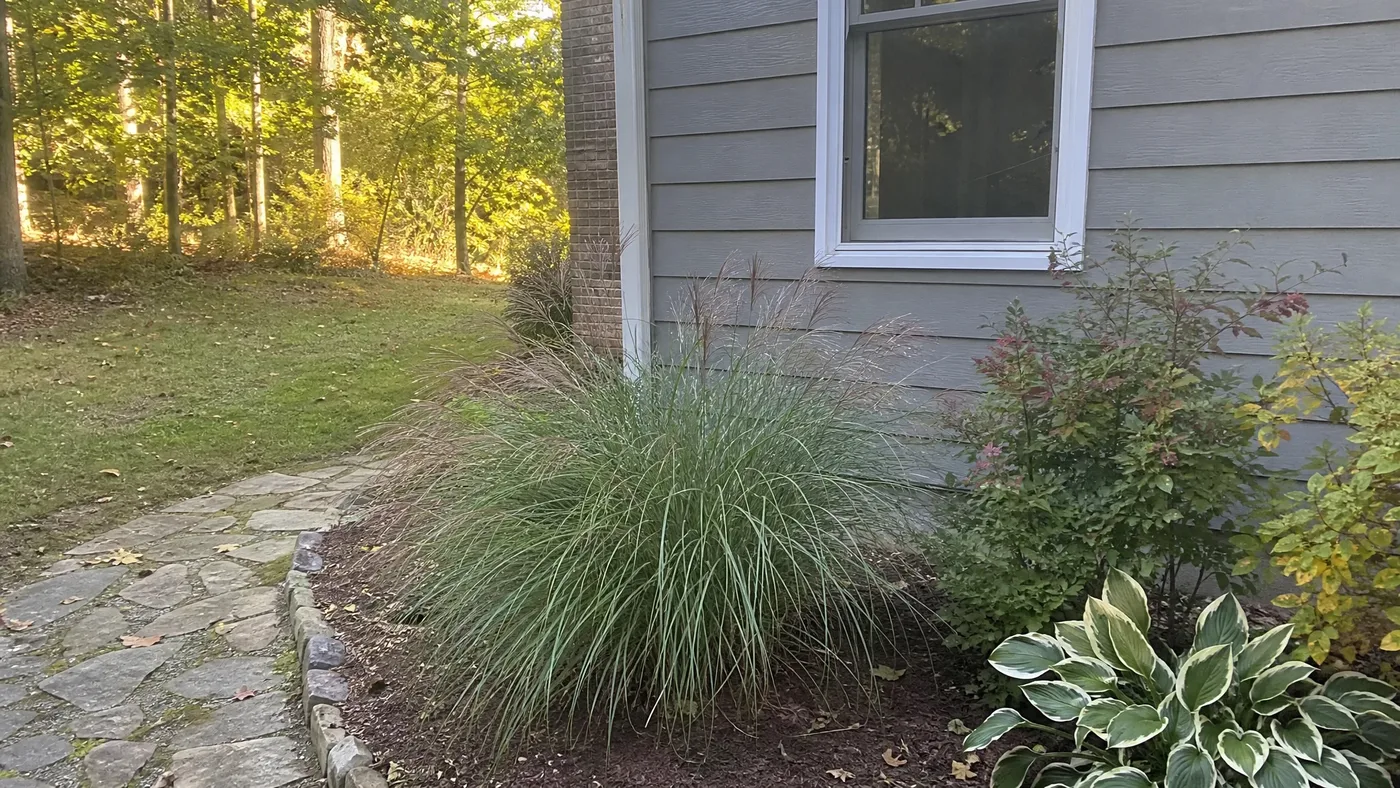
Start with the sight line, not the plant. A mid-sized arching grass earns its place where you see it from a distance and from the side: along a front walk, at the corner of a driveway bed, or in front of a foundation shrub that needs softening. The leaves fall outward, so the clump reads best with open ground on at least one side instead of pressed flat against a fence or wall.
Scale is the reason to choose a dwarf. The species grows 4 to 12 feet tall and 4 to 6 feet wide, which makes a screen for a big lot and a problem in a bed beside a path. A dwarf selection keeps the fountain shape in a space you can reach across.
Where the Sight Lines Fall
If the bed faces the street, put the grass where the eye lands first and let lower plants fill in toward the front. If the bed is seen from a window, place the clump so the plumes show against the glass or the lawn behind. Either way, leave room for the blades to spill past the crown on every side before they meet a walkway.
A single clump also works as an anchor. One Little Fountain in the middle of a bed of lower perennials gives the planting a fixed point, and it needs no staking or support to hold that role. Our mature size guide covers the numbers for the whole group. Here we stay with one cultivar and one circled bed.
Little Fountain Dwarf Maiden Grass Next to Adagio
'Kleine Fontaine' is German for little fountain, and it grows up to about 5 feet tall with a spread of roughly 1.5 to 3 feet. Some tags quote smaller numbers, and a young pot will always look smaller still, so treat 5 feet as the ceiling for a settled clump. The species grows at a medium pace, so expect the clump to fill out over a few seasons.
Adagio stands at about 4 feet, and its listed height range runs about 3 to 5 feet. On height alone the two overlap almost completely, so height is not the number that decides between them.
In our rows, Adagio stands tighter and more upright while Little Fountain tumbles outward and looks wider for its height. The table below sets the two side by side.
| Trait | Little Fountain | Adagio |
|---|---|---|
| Height | Up to about 5 feet | About 4 feet |
| Leaves | Narrow, arching, white midribs | Long, narrow, gray-green, arching |
| Early plumes | Feathery, red, open in late summer | Pink-tinged, in summer |
| Later plumes | Turn silver soon after opening | Turn creamy-white in autumn |
| Fall color | Yellow | Orange and yellow |
So the call comes down to footprint. If the bed is a narrow strip beside a path, choose Adagio's tighter line. If the bed has open ground on one side and you want a soft mound, Little Fountain is the better pick. The same logic holds if you are replacing a clump that has already failed in a tight spot.
If the Clump Reads Wider Than Expected
Work out when the width showed up before you change anything. A first-year clump that sprawls is rarely a size problem, because the blades are longer than the crown beneath them is wide, so the arch always looks bigger than the footprint. A clump that keeps pushing outward in year three or four is a different case, and the right fix depends on which one you have.
Match the Symptom to the Fix
Read down this list and stop at the first line that matches your bed, because each cause has its own remedy.
- If the blades lie across the path but the crown is still small, the plant is set too close to the edge. Lift it in early spring and reset it farther back, since moving the crown once costs less than trimming blades all summer.
- If the ring of growth keeps widening while the center thins, the clump has outgrown its space. Divide it and replant one piece, which brings the width back to where it started.
- If the clump is wide and tall together, check the label. A plant heading well past 5 feet is probably a larger selection than Little Fountain.
- If the bed is rich and well watered, the grass is simply growing as asked. The Arkansas extension service notes that these grasses grow larger and faster in good soil than poor.
Common advice is to feed ornamental grasses every spring. For a dwarf in a tight bed we do the opposite and leave the soil alone, because extra growth is the width you are trying to avoid. Cutting back will not help either. It resets height, not footprint.
How Dwarf Maiden Grass Arches, Spills and Settles
Little Fountain is a clumping grass whose blades leave the crown, rise a short way and bend over, which is where its name comes from. The leaves are narrow and arching. Because the outer blades fall outward, the clump reads as a mound with a soft skirt instead of a tight vase, and that skirt is what you are really budgeting space for.
From Shoots to Fountain
New growth comes up after the old foliage is gone. Dead foliage and old flowered stems should be removed in spring, and the Arkansas extension service says to cut the plants to the ground. As a warm-season grass it moves slowly in cool weather, so a bare crown in early spring is normal. The shoots start narrow and upright, then lean over as the blades lengthen, and the fountain shape arrives through early summer.
Late-Season Settling
By late summer the arching plumes pull the clump outward a little more, and by autumn the leaves turn yellow. Through winter the dry foliage settles into a looser, flatter mound. A flattened clump after heavy rain or snow is the habit at work, not damage.
If you cut it back, do it in late winter, before new shoots show, so you do not trim green tips. Our cutting back guide has the details.
Plumes Riding Just Above the Foliage
Little Fountain's flower heads are feathery, arching and red, opening in late summer and soon turning silver. They rise above the arch of blades instead of hiding inside it, so you see them from the path without leaning in. Because the heads arch as well, they lean with the foliage and never stand like stiff spikes.
Timing depends on where you garden. NC State notes that Adagio flowers are consistent through August, K-State calls Adagio one of the earlier blooming Miscanthus in its trial, and the Arkansas extension service reports the species flowering in late September. Little Fountain's late-summer window sits inside that spread, so expect plumes later in cooler climates.
How the Color Changes
Customers usually ask us whether the red holds all season. It does not. The red is the opening act, and the silver is what stays on the clump. Adagio runs a different course, pink-tinged in summer and creamy-white by autumn, so a plume that goes red to silver is a useful clue to which cultivar you own.
Our bloom time guide covers how long plumes last across the group.
One Blade Up Close: Width, Texture, Edge
Pick up a pot in late spring or summer and look at one blade before anything else. Little Fountain's leaves are narrow and arching, with white midribs. That pale line down the center is the quickest check you can make, and it is easy to see on a full-grown blade held up to the light.
Width alone will not separate it from Adagio, because Adagio's foliage is also narrow. The fine texture of the clump comes from that slim blade. Use the midrib and the plume color together, and the cultivar is hard to mistake. Adagio's blades read gray-green, which is another quick contrast.
Handling the Edges
Our sources give no detail on blade edges, so we simply wear gloves when we move pots, as you would with any ornamental grass. Run a gloved hand down a blade from the base and feel the texture before you judge it. Handle the clump the same way when you plant.
What to Expect on Arrival
Time of year decides what you see. A plant sent in late winter or early spring may be cut back to short stubble, with no blades to judge. In that case, read the crown and the first narrow shoots, and expect the fountain to build through the season. If you order from us, use this section as your check the day the box arrives.
Where Dwarf Maiden Grass Belongs, Where It Doesn't
A clear yes or no comes from three things: the hours of sun, the drainage and the room around the crown. The Arkansas extension service says these grasses need at least six hours of sunlight, and UF/IFAS describes them as adaptable to most well-drained soils. Match your circle to those two, then check the space.
Good Fits
Say yes to these situations.
- A front walk or driveway edge in full sun, where the arch can spill without blocking the path.
- A foundation bed in front of taller shrubs, since a settled clump tops out near 5 feet.
- A hot, dry strip or slope, because the Arkansas extension service calls these grasses extremely drought tolerant once established.
- A yard with browsing deer, since the species is deer resistant.
Poor Fits
Say no, or look for another plant, in these cases. Deep shade is the first. The grass also takes partial shade, so treat it as a compromise and not the plan. A poorly drained low spot is the second, since the best-documented soils for this grass are well drained ones.
The third is a strip so narrow that the blades must lean onto the path or the lawn edge. There, Adagio's tighter line wins. Rust can occasionally appear on the foliage, but UF/IFAS notes it often goes away in drier weather, so it is not a reason to skip a good site.
Choosing Little Fountain for Your Circled Bed
If the bed has open ground on one side and at least six hours of sun, plant Little Fountain and let it spill. If the strip is tight against a path or wall, plant something more upright. Settle that before you worry about plume color or blade width, because footprint is the part you cannot fix later without lifting the clump.
For tighter spaces, the Adagio comparison sets out the narrower options in more detail.
Dwarf Maiden Grass
Nursery-grown Dwarf Maiden Grass in sizes from Quart, shipped to your door.
From $19.99
Shop Now →Our Dwarf Maiden Grass gets a spot in open rows where the sun stays on it all day and the soil drains freely, tended by a small team of growers on our own farms. We grow top-quality grasses and other plants, and each clump is checked for a sound crown and the narrow, arching blades with their pale midrib. Once you know where Little Fountain will spill in your bed, pick out a plant for your own garden.