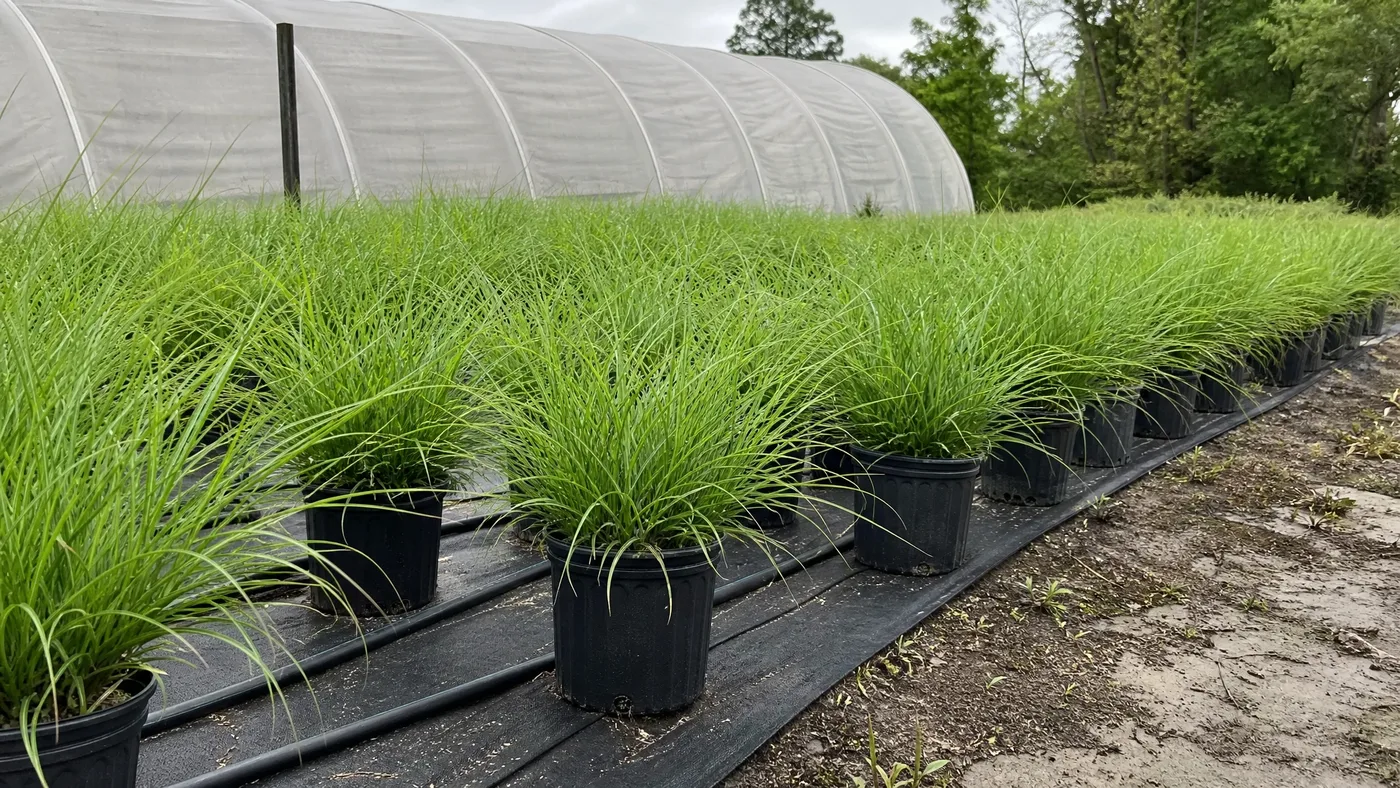
Dwarf Maiden Grass Plant Patents: Division and Propagation Rules
A customer stands at the nursery bench, turns a plant tag over, and squints at the letters PP followed by a string of digits. Then comes the question we hear in one form or another every season: "Does this mean I can't divide it?" Getting the answer wrong costs the plant in two ways.
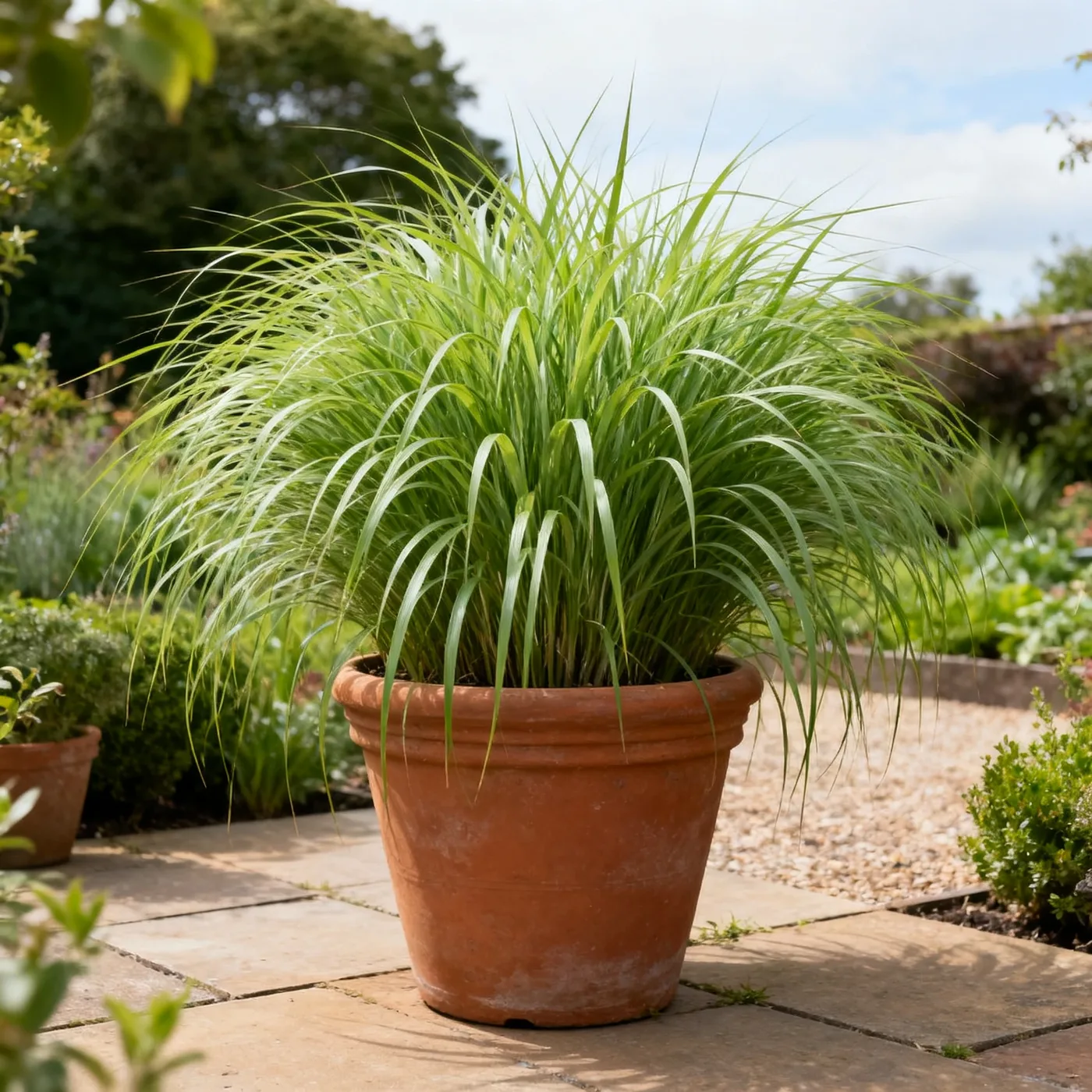
Some gardeners skip dividing out of fear, and the clump slowly hollows out in the center. Others divide and pass pieces around without knowing where the line sits. The rules are simpler than the tag makes them look. Read on for what the patent covers, what the PP number restricts, what you can do freely in your own yard, where sharing becomes selling, how seeds fit in, and when a patent runs out.
Does a Plant Patent Cover Dwarf Maiden Grass?
Many people assume patents belong to brand-new, flashy plants and that an ornamental grass as common as maiden grass must be free for anyone to copy. That is true of the wild-type species, Miscanthus sinensis, which is native from China to Malaysia and the Russian Far East and carries no patent at all. It is not true of every named selection. The dwarf cultivars most often sold today, 'Adagio' and 'Little Miss', each carry a US plant patent, and the number for 'Little Miss' is PP28,849.
So the patent attaches to the cultivar, not to the plant family. A plain species seedling from a roadside or a garden center flat has no such restriction, while a labeled 'Adagio' does. That explains why two clumps that look nearly alike can be treated so differently. The cultivar is a single selection that growers multiply by division, so the patent follows that one selection through every clump descended from it.
The tag is real proof, not a sales flourish. The University of Vermont Extension notes that patented plants are marked with the letters PP followed by a number, or with PPAF when the application is still pending. Our comparison of Adagio to Yaku Jima shows how the dwarf selections differ in the garden, and the tag on whichever one you hold tells you its patent status. Short version: named cultivar, patent likely, wild species, none.
Is the PP Number Just Decoration?
Some gardeners wave the PP number off as marketing, a bit of fine print meant to make a plant sound special. It is a legal notice, and it restricts something narrow and specific. The USPTO describes the grant as protecting the owner's right to exclude others from asexually reproducing the plant and from using, offering for sale, or selling the plant so reproduced, anywhere in the United States, for 20 years from the filing date.
Notice what is missing from that sentence. Nothing stops you from buying the plant, owning it, growing it, cutting the plumes for a vase, or letting it fill out for years. The restriction is on making copies by cloning methods and then selling them. Dwarf maiden grass multiplies naturally by splitting its clump, and splitting is exactly the kind of asexual reproduction the patent has in view.
It also helps to separate a patent from a trademark. A patent protects the plant's genetics and how it is cloned, while a trademark protects only a name or brand. A tag can carry both, which is why you may see a catchy marketing name next to the cultivar name and the PP number. The number is the part that carries legal weight about copying, and that is why growers like us take it seriously.
Dividing Your Own Dwarf Maiden Grass Is Allowed
The fear behind most patent questions is simple: "I followed a division guide, so did I just break the law?" Let us be straight about it. The strictest reading comes from Iowa State Extension, which says that a patented plant cannot legally be propagated by division, cuttings, or other vegetative methods without permission from the patent holder. The University of Vermont adds that division is on the USPTO's list of protected propagation methods, though it also says litigation against individuals is rare.
Personal Division Versus Commercial Propagation
Splitting a clump you own, to renew a tired center or to fill a second bed of your own, is ordinary plant care and not what patent holders pursue. Their business concern is other growers cloning the plant and selling it. A gardener keeping a clump healthy is not that. If a license or tag for your plant says something different, follow it, and ask the nursery if you are unsure.
Why Dividing Helps the Plant
A dwarf clump that has thickened for several years often dies out in the middle, and a split restores it. Skipping the job out of worry leaves you with a ring of grass around a dead hub. Our division guide walks through the digging and replanting. If you buy from us, the label names the cultivar, and we are glad to answer a patent question before you order.
You Can't Sell the Divisions You Make
The belief that "just a few" divisions are fair game at a plant swap or a roadside stand is the one most likely to get a gardener into real trouble. Iowa State Extension states plainly that sharing divisions of patented perennials at a garden club plant sale or swap is technically prohibited during the patent period. The size of the sale does not change that. Selling a copy of a patented plant is the core of what the patent forbids.
We often see well-meaning gardeners divide a clump every spring and sell the extras for a few dollars at a church sale. In their minds it is a hobby. In legal terms it is a sale of an asexually reproduced patented plant, and the patent holder never agreed to it. The practical risk to a small seller is low, but you are better off knowing where the line is than learning it from a letter.
The cleanest rule is a simple one. Divide for your own garden as often as the plant needs it. If money, a table at a sale, or a trade of plants for plants is involved, either buy the plant from a licensed grower or sell something that is not patented. Plenty of unpatented perennials divide just as easily and make fine sale-table stock.
Seeds From Dwarf Maiden Grass Don't Count
Another idea goes around: a volunteer seedling under the plumes, or seed you sow yourself, surely escapes the patent because it is not a division. In patent terms, the grant covers asexual reproduction, and a seed comes from sexual reproduction, so a seedling is a different matter from a clone. That is thin comfort, because a seedling is not the cultivar you meant to grow.
Seed carries a mix of genes from two parents, and the plant that comes up can differ in height, leaf width, bloom time and color from the 'Adagio' or 'Little Miss' you started with. A patented dwarf selection is prized for staying compact, and a seedling may drift back toward the tall habit of the species, which runs 4 to 12 feet. You could end up with a plant twice the size you planned for.
Some selections barely set seed at all. NC State notes that 'Yaku Jima' is a dwarf form with low seed set, so you may never see volunteers there. The honest answer is that seed is no workaround. It does not give you more of the plant you love, and it cannot be labeled or sold as that cultivar. Cutting the plumes before the seed ripens, as our cutback guide describes, avoids surprise seedlings entirely.
Sharing Dwarf Maiden Grass With Neighbors
Gifting a division to a friend feels different from selling one, and morally it is. Legally, the situation is murkier, and we would rather lay it out than pretend. A patent bars reproducing the plant without permission, so making a copy to hand over is still making a copy. The difference in practice is that nobody is profiting, and enforcement against a neighbor over a clump of grass is, as the University of Vermont puts it, rare.
The table below shows how we read the common situations, so you can decide with your eyes open.
| Situation | How we read it |
|---|---|
| Dividing your clump for your own beds | Ordinary care, the normal use of the plant |
| Moving pieces to another bed you own | Same as above |
| Giving a division to a friend | Technically a copy made without permission, low practical risk |
| Trading divisions at a club swap | Technically prohibited while the patent runs |
| Selling any division | Over the line |
If a community group wants dwarf maiden grass for a shared planting, the clean route is to buy plants. A potted clump lets a neighbor have the exact cultivar with the paperwork already settled, and a young plant fills out in a season or two. For a plant swap, bring unpatented plants and keep your 'Adagio' at home where it belongs.
Patents Run Out on Adagio and Little Miss
Some people are sure that patents last forever and that every patented plant is locked up for good. They are not, and the term cannot be renewed. A plant patent lasts 20 years from the filing date. The clock starts at filing, not at the day the patent was granted or the day you bought your plant, so the plant may be closer to the end of its term than the tag suggests.
Once a patent expires, anyone can propagate and sell that cultivar. The name may still be a protected trademark, so a copy might need to be sold under a different label. Expiry dates differ for each selection, and 'Adagio' and 'Little Miss' have their own filing dates. We do not quote them here, because the only reliable source is the patent record itself.
To check a specific plant, work through these steps:
- Find the PP number on the tag or in the nursery listing.
- Look the number up in the USPTO's patent search and note the filing date.
- Add 20 years to that date to find when the term ends.
- If the record is unclear, ask the nursery that sold you the plant.
Settling the Patent Questions for Good
The patent covers named cultivars such as 'Adagio' and 'Little Miss', not the wild species. The PP number restricts making and selling copies, not owning, growing or enjoying the plant. Dividing your own clump for your own yard is normal care. Selling or trading divisions is where the line sits, and seedlings are no shortcut because they rarely match the parent. Patents also expire, 20 years after filing.
So divide freely at home, keep your clump healthy, and read the tag when you buy. If a question about a sale or a swap ever comes up, ask the nursery before you act and you will get a straight answer.
Dwarf Maiden Grass
Nursery-grown Dwarf Maiden Grass in sizes from Quart, shipped to your door.
From $19.99
Shop Now →Our growers watch these clumps through the year, from spring regrowth in full sun and well-drained soil to the plumes, so a patent question is one we are happy to answer. We are a small business that grows its own grasses, and you can browse what is in stock now.